 By Subhash Kumar
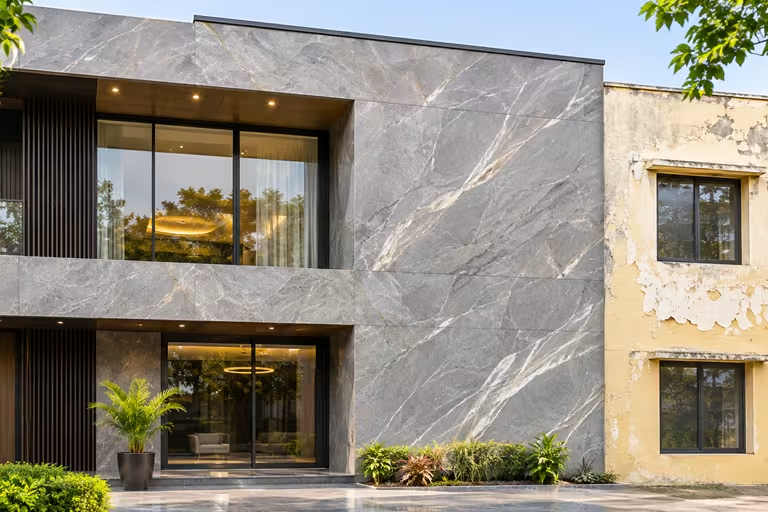
A building’s exterior is the first thing anyone notices, and it sets the tone for years to come. For a long time, paint was the go-to finish, and it still has real charm. More and more, though, architects and homeowners choose sintered stone for building facades that stay handsome through sun, rain, and time. The appeal is simple: lasting colour, easy care and a surface that keeps its good looks.
Why The Facade Finish Matters So Much
A home’s outer skin does far more than look attractive. It shields the structure from the weather, shapes the first impression, and influences how much upkeep the building needs over the years.
A thoughtful exterior wall design earns its keep in a few clear ways:
- It guards the walls from rain, sun and dust.
- It sets the character and kerb appeal of the whole home.
- It decides how often the exterior needs attention.
- It protects the property’s long-term value.
With all of this in mind, choosing the right finish leads to an exterior that looks good and performs for the long run. The best facades balance one or two bold choices with calm, quality finishes, so the home feels considered rather than busy, and welcoming from the very first glance.
How Sintered Stone Performs Outdoors
Sintered stone is made by compacting natural minerals under intense heat and pressure, which creates a dense, hard-wearing surface. That process gives it qualities that suit outdoor life beautifully.
A few strengths stand out on a facade:
- Strong UV resistance, so colours stay true for years.
- A non-porous body that shrugs off moisture and staining.
- A tough surface that resists scratches and knocks.
- Easy to clean, often needing only a rinse.
These traits make sintered stone a dependable choice for exteriors that face the full force of the weather, whether the sun is beating down or the monsoon is in full flow. The surface keeps its colour and texture year after year, so a facade looks newly finished long after the work is done.
Comparing Sintered Stone And Exterior Paint
Both finishes have their place, so it helps to see what each brings. Paint is quick to apply, offers almost any colour, and refreshes a wall at a modest cost, which makes it a friendly choice for a fast update. Over time, strong sun can fade it, and it needs repainting every few years to stay at its best.
Sintered stone takes a different path. It costs more upfront and needs skilled fitting, but it holds its colour and finish for decades with minimal care. You don’t need to plan for a repainting cycle, and the surface resists the fading and flaking weather can bring to a painted wall. For a facade that faces heavy sun and monsoon rain, that durability often makes the higher upfront spend worthwhile over the building’s life.
Where Sintered Stone Shines On A Building
Sintered stone suits a wide range of buildings, which is part of its appeal. On a family home, it gives the exterior a calm, quality feel that ages gracefully. On commercial and hospitality projects, it offers a durable facade for building fronts that holds up through heavy footfall and busy seasons.
A few settings show it at its best:
- Full elevations that need a clean, consistent finish across large areas.
- Feature walls and entrances that deserve natural character.
- Plinths and bases that take knocks and splashes at ground level.
- Facades in coastal or dusty locations, where easy cleaning is a real bonus.
Matching the finish to the building and its surroundings helps the exterior look right and last well, season after season.
Design Freedom On The Facade
A facade finish should look as good as it performs, and sintered stone gives designers plenty to work with. It comes in large formats and a wide palette, from stone-inspired veining to calm, solid tones.
This range opens up several looks:
- Large panels that create clean, near-seamless elevations.
- Stone-inspired finishes that bring natural depth without heavy upkeep.
- Mixed-material facades that pair the surface with render, timber or glass.
- Continuous runs from wall to feature zones for a cohesive feel.
With so much choice, a well-planned exterior wall design can feel both striking and refined, giving a building a frontage that stands out for the right reasons.
Performance And Value That Last
A facade is a long-term investment, so performance is a pleasure to plan for alongside the look. A surface that keeps its colour and needs little care saves effort and money over the years, and keeps a home looking cared for well into the future.
A few qualities give a facade lasting value:
- Colour that stays vivid through strong sun and heavy rain.
- A surface that resists moisture, staining and everyday grime.
- Low upkeep, so an occasional wash is usually enough.
Among large-format options, surfaces from manufacturers such as Neotra Advanced Surfaces offer UV-resistant, moisture-resistant, and stain-resistant finishes suited to facades for building projects of every scale. Pairing a durable surface with sound detailing for water and ventilation gives a home a lasting look and a lighter maintenance load for decades.
Conclusion
A facade sets a home’s character while protecting it. Paint offers a quick, affordable refresh, while sintered stone delivers lasting colour, easy care, and a finish that holds up for decades. Weigh the upfront cost against years of low upkeep, choose a finish suited to the local climate, and the exterior will keep looking its best long after the work is done.
 Saurav Mehra