 By Saurav Mehra
The terrace is often the most underused space in an Indian house, used mainly for drying clothes, storing old furniture and flying kites at Makar Sankranti, until someone in the family decides to fill it with plants, and the household must choose between a terrace garden and keeping a plain terrace. A terrace garden brings fresh vegetables, cooler rooms below, birdsong and a calm green space for evening tea. A plain terrace stays open for drying clothes, solar panels, water tanks, family gatherings and summer nights under the stars, with almost no upkeep. Both have real value, and the best choice depends on your roof’s strength, waterproofing, water supply and how your family likes to use the space.
What Each Option Offers
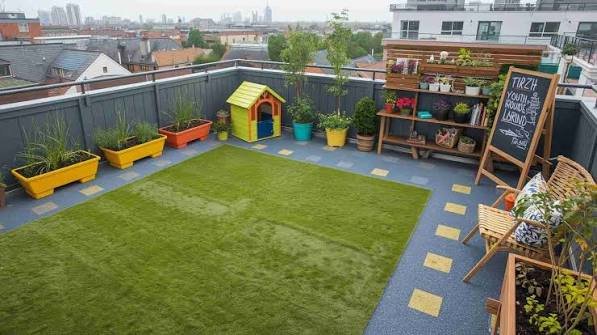
A terrace garden can range from a few pots of tulsi and chillies to raised beds, vegetable patches, fruit plants in large containers, a small lawn and seating areas. Some homes create full green roofs, where soil and plants cover most of the terrace over specialised waterproofing and drainage layers.
A plain terrace keeps the roof open and flexible. It serves for drying clothes and papads, storing water tanks, installing solar panels, hosting celebrations, flying kites and, in many North Indian homes, sleeping outdoors on hot summer nights.
Heat Relief for the Top Floor
Top-floor rooms in Indian houses often feel like ovens in summer because the roof slab absorbs sunlight all day and radiates heat at night.
A well-planted terrace garden shades the slab and cools it through evaporation from soil and leaves. Planted roofs can stay many degrees cooler than bare concrete in direct sun, which can make top-floor rooms noticeably more comfortable and reduce AC use.
A plain terrace doesn’t have to stay hot, though. A reflective cool-roof coating, usually white, bounces much of the sunlight back and lowers slab temperature significantly at a modest cost.
Weight: One Planter Can Weigh as Much as Four Adults
This is the factor most families overlook.
Wet garden soil weighs roughly 1,600 to 2,000 kg per cubic metre. Take a single large planter measuring 2 ft × 2 ft and 1.5 ft deep, about 0.6 × 0.6 × 0.45 metres, or 0.16 cubic metres. Filled with wet soil at around 1,800 kg per cubic metre, it weighs roughly 290 kg, about as much as four adults standing in one small spot.
Multiply that across several planters or raised beds, and the load on the roof slab adds up quickly.
To keep your terrace safe:
- Consult a structural engineer before planning large beds or a full green roof.
- Place heavy planters near columns, beams and along parapet edges, rather than in the middle of the slab.
- Use lightweight growing media, such as cocopeat mixed with compost and perlite, which weigh far less than garden soil.
- Prefer grow bags and lightweight containers over heavy concrete planters.
Waterproofing and Drainage
A terrace garden keeps the slab moist for long periods, so waterproofing must be done properly before planting.
Key steps include:
- Strong waterproofing: a flexible membrane rated for constant moisture
- Root barrier: prevents roots from piercing the waterproofing and slab
- Drainage layer: drainage boards or gravel with a geotextile fabric to let excess water flow away
- Clear outlets: keep rainwater outlets accessible and free of soil and leaves
- Raised containers: stands or bricks under pots allow air and water to pass beneath
Also avoid standing water in saucers and trays, since they can breed mosquitoes.
A plain terrace needs only standard roof waterproofing and occasional inspection, usually before the monsoon.
Water and Time Commitment
Plants on a sunny terrace dry out fast, especially from March to June.
As a rough guide, terrace plants may need around 4 litres of water per square metre daily in peak summer. For about 200 sq ft of planted area, roughly 18.6 square metres, that’s around 75 litres a day, or about 2,250 litres a month.
Watering by hand takes around 15 to 30 minutes daily. A drip irrigation system with a simple timer saves time and water, delivering moisture directly to roots. Using harvested rainwater or RO reject water, if its TDS isn’t too high, can reduce demand on fresh supply.
Gardens also need weekly attention for pruning, pest checks, composting and harvesting. If your family travels often, plan for someone to water or install automatic irrigation.
A plain terrace needs only occasional sweeping and cleaning of drains.
Keeping a Plain Terrace Useful and Cool
If you prefer an open terrace, a few improvements make it more comfortable:
- Apply a reflective cool-roof coating to reduce heat in the rooms below.
- Add a pergola or shade sail over a seating area.
- Keep zones for drying clothes, water tanks and solar panels organised.
- Install lights and a few movable chairs for evening use.
A Balanced Layout
Many families get the best of both with a partial garden:
- Planters and grow bags along the parapet edges, where the structure is strongest
- Vertical gardens or climbing plants on the parapet walls
- An open central area for drying clothes, gatherings and kite flying
- A shaded corner with seating among plants
- Solar panels and water tanks kept clear for maintenance access
Plants That Do Well on Indian Terraces
- Herbs: tulsi, mint, coriander, curry leaves and lemongrass
- Vegetables: tomatoes, chillies, brinjal, okra, spinach, methi and beans
- Fruits in large containers: lemon, guava, pomegranate and dwarf mango varieties
- Flowering plants: hibiscus, bougainvillea, marigold, jasmine and periwinkle
- Hardy greens: areca palms and snake plants in shaded corners
Choose plants that suit your city’s climate and the amount of sunlight your terrace receives.
Decision Guide
A terrace garden suits you if:
- Your roof has been checked for load and waterproofed properly
- You have time or an irrigation system for daily watering
- You’d like fresh herbs and vegetables
- Top-floor heat is a problem
A plain terrace suits you if:
- You need space for drying clothes, solar panels or gatherings
- Your roof’s structure or waterproofing is uncertain
- Your family travels often
- You prefer minimal maintenance
FAQs
Q1. Is a terrace garden safe for my roof?
A: Yes, if the slab’s load capacity is checked and waterproofing, root barriers and drainage are done properly.
Q2. Does a terrace garden reduce heat in the house?
A: Yes, plants and soil shade and cool the roof slab, making top-floor rooms more comfortable.
Q3. How much water does a terrace garden need?
A: In peak summer, roughly 4 litres per square metre daily, so a 200 sq ft garden may need around 75 litres a day.
Q4. What is the lightest soil for terrace gardens?
A: Mixes of cocopeat, compost and perlite are much lighter than regular garden soil.
Q5. Where should heavy planters be placed?
A: Near columns, beams and along the parapet edges, where the structure is strongest.
Q6. How can a plain terrace be kept cool?
A: A reflective cool-roof coating and some shade can significantly reduce heat absorption.