 By Saurav Mehra
Most Indian terraces have a familiar black, blue or cream plastic water tank on them, but stainless steel tanks are increasingly appearing on rooftops, particularly in Kerala and other humid regions, so the choice between a PVC water tank and a stainless steel water tank comes up often when building a new home or replacing an old one. Plastic tanks are affordable, light and quick to install. Stainless steel tanks cost more but promise longer life, easier cleaning and no plastic smell. Since the water in your overhead tank reaches every tap, shower and kitchen in the house, it’s worth understanding how each material behaves over the years.
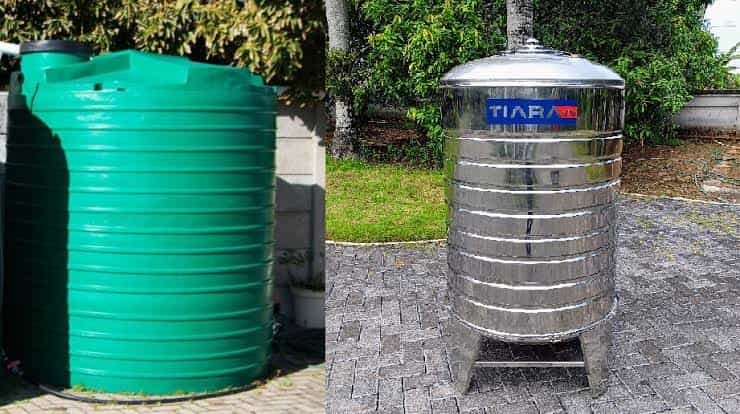
What “PVC” Tanks Really Are
Although people commonly call them PVC tanks, most plastic water tanks sold in India are made from LLDPE, or linear low-density polyethylene, shaped by rotational moulding. Indian standard IS 12701 covers these rotomoulded polyethylene water tanks.
Most quality plastic tanks have multiple layers:
- An outer layer with UV stabilisers to resist sunlight
- A middle layer or two, often foam or insulating material to reduce heat transfer
- An inner food-grade layer, usually white, sometimes with antibacterial additives
Single-layer tanks are the cheapest. Three-layer and four-layer tanks are the most common for homes, offering a good balance of price and performance.
How Stainless Steel Tanks Are Made
Stainless steel water tanks are made from sheets of steel, usually food-grade SS 304, formed and welded into cylindrical tanks. Quality tanks use clean, smooth welds, often by TIG welding, so there are no rough seams where dirt can collect.
Many premium models are double-walled, with insulation between an inner and outer steel shell to keep water cooler. In coastal areas, some manufacturers also offer SS 316, which resists salty air even better.
Water Quality and Hygiene
Algae needs light to grow. Thin, single-layer plastic tanks can let enough light through for green algae to develop inside, especially in sunny climates. Multi-layer opaque plastic tanks block light effectively and prevent this.
Stainless steel is completely opaque, so algae can’t grow inside at all. Its smooth surface doesn’t absorb odours, and cleaning is quick, since dirt and slime don’t cling easily to steel.
New plastic tanks sometimes give water a mild smell for the first few days, especially in hot weather. Food-grade virgin plastic from reputable brands keeps this minimal. Stainless steel imparts no smell or taste, which is one reason many families prefer it for drinking and cooking water.
Heat on the Terrace
Steel conducts heat well, so a single-walled stainless steel tank in direct sun can make water quite warm in summer. Double-walled insulated steel tanks largely solve this.
Plastic itself doesn’t conduct heat as readily, and multi-layer tanks with insulating middle layers keep water cooler than single-layer ones. Light-coloured tanks absorb less heat than black ones.
For either type, shading the tank with a simple roof cover or placing it where it gets afternoon shade helps significantly.
Strength, Lifespan and Weather
Plastic tanks gradually age in strong sunlight. Even with UV stabilisers, the outer layer may fade, become brittle and develop cracks after many years. A good plastic tank typically lasts around 10 to 15 years.
Stainless steel tanks resist sunlight completely and can last 25 years or more with basic care. They can dent if struck hard, but rarely crack. Their welds are the main point to inspect over time.
Empty plastic tanks are light, so in cyclone-prone coastal regions they should be securely tied down or placed within a frame to prevent strong winds from shifting them.
Cost Over the Tank’s Life
Current market prices place a 1,000-litre plastic tank at about ₹7,000 to ₹12,000, depending on layers and brand. A 1,000-litre stainless steel tank typically costs about ₹18,000 to ₹35,000, with insulated premium models going higher.
Spread across their lifespans, the gap narrows:
- Plastic tank at ₹9,000 lasting 12 years: about ₹750 per year
- Stainless steel tank at ₹26,000 lasting 25 years: about ₹1,040 per year
Over 25 years, you’d likely buy two plastic tanks while one steel tank keeps working. A steel tank also retains some scrap value when eventually replaced, while an old plastic tank has little.
Installation and Weight
Both tanks are light compared with the water they hold, since 1,000 litres of water weighs about 1,000 kg. A plastic 1,000-litre tank usually weighs a few dozen kilograms, while a stainless steel one weighs somewhat more, especially insulated double-walled models.
Both need a level, sturdy platform covering the full base. Plastic tanks need flat, continuous support so the bottom doesn’t bulge. Steel tanks typically come with legs or a stand.
Inlet, outlet and overflow connections are similar for both, and plumbers across India install both types routinely.
Buying Checklist
For plastic tanks:
- Choose three or more layers with UV protection.
- Look for IS 12701 marking and food-grade inner layer.
- Prefer lighter colours or insulated models for sunny terraces.
- Check the warranty period.
For stainless steel tanks:
- Confirm the grade is SS 304, or SS 316 for coastal areas.
- Inspect welds for smoothness and finish.
- Choose double-walled insulated tanks for hot regions.
- Ask for a material certificate from the manufacturer.
For both:
- Ensure the lid fits tightly.
- Clean the tank at least twice a year.
- Use a level, strong platform.
Which Tank Fits Your Home
A plastic tank suits you if:
- You want the lowest upfront cost
- You need a quick replacement
- Your terrace has limited load capacity or space
- You’re in a rented property
A stainless steel tank suits you if:
- You want long life with minimal replacement
- Water hygiene and taste are top priorities
- You live in a humid area where algae is common
- You’re building a home you plan to stay in for decades
FAQs
Q1. Which is better, a plastic or stainless steel water tank?
A: Plastic tanks are cheaper and lighter, while stainless steel tanks last longer and are easier to keep hygienic.
Q2. Are PVC water tanks actually PVC?
A: Most are made from LLDPE plastic using rotational moulding, though they’re commonly called PVC tanks.
Q3. Does water get hot in a stainless steel tank?
A: Single-walled steel tanks can heat up in sun, but double-walled insulated tanks stay much cooler.
Q4. How long does a plastic water tank last?
A: A good multi-layer plastic tank usually lasts around 10 to 15 years.
Q5. Why does algae grow in some water tanks?
A: Algae grows when light passes through thin tank walls, so opaque multi-layer or steel tanks prevent it.
Q6. Which steel grade is best for water tanks?
A: SS 304 suits most homes, while SS 316 is better for coastal areas.