 By Saurav Mehra
Taps get turned dozens of times a day in an Indian home, at the kitchen sink while washing utensils, in the bathroom for bucket baths and at the wash basin before every meal, so the choice between brass faucets and stainless steel faucets matters as much as their shine. Brass has long been the standard in Indian bathrooms, usually with a gleaming chrome finish and a reassuring weight. Stainless steel faucets have grown popular for their naturally rust-resistant body, brushed modern look and resistance to finish peeling. Hard water, borewell supply and daily cleaning habits all affect how each one ages.
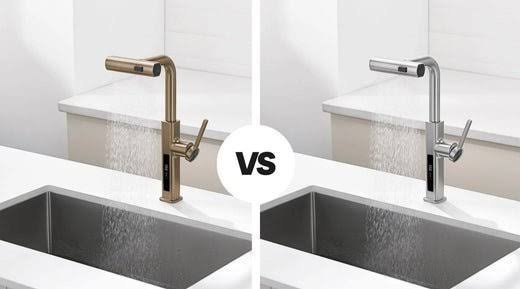
What Each Faucet Is Made Of
A brass faucet is made from an alloy of copper and zinc, cast or forged into shape and then usually plated. A typical chrome finish involves layers of nickel and chrome over the brass body, giving that mirror-like shine. Brass is easy to shape, so it allows intricate designs, curved spouts and detailed handles.
A stainless steel faucet is made from steel alloyed with chromium and nickel. Grade 304 is the standard for quality faucets because it resists rust well. Stainless steel faucets often have a brushed or satin finish and don’t need plating, though some come with PVD coatings in black, gold or gunmetal.
Durability and Strength
Both materials are long-lasting when well made.
Quality brass faucets are often solid-cast or forged, which makes them heavy and sturdy. Lift a brass mixer in a showroom and you’ll feel the difference compared with cheaper taps. That density helps them stand up to years of daily use.
Brass and stainless steel actually weigh about the same for the same volume of metal. The difference is construction. Many stainless steel faucets are made from tubes rather than solid castings, so they can feel lighter even when they’re well built. A lightweight stainless steel tap isn’t necessarily weak, but very thin, hollow designs at very low prices may dent or wobble over time.
Hard Water, Salty Water and Corrosion
Many Indian cities and towns use hard or salty borewell water, which leaves white limescale deposits on taps.
Brass resists corrosion well, but its chrome plating can be damaged when scrubbed with harsh cleaners or abrasive pads to remove scale. Once the plating chips or peels, the brass underneath can tarnish. In particularly aggressive water, lower-quality brass may also lose zinc over time, a process called dezincification, which is why better brands use dezincification-resistant alloys.
Stainless steel 304 handles hard water and humidity well and has no plating to peel. Water spots still appear, but a brushed finish hides them better than shiny chrome. Lower grades such as 201 or 202 are cheaper but can show rust spots, especially in coastal homes. Always ask for the steel grade before buying.
In seaside cities like Chennai, Mumbai or Goa, both good-quality chrome-plated brass and SS 304 faucets work well, though cheap plating and low-grade steel tend to deteriorate faster.
Finishes and Looks
Brass faucets offer the widest design range. Chrome is the classic choice, and brass also takes finishes like brushed nickel, matte black, rose gold and antique bronze. Traditional and ornate designs are almost always brass.
Stainless steel faucets suit modern, minimal kitchens and bathrooms. Brushed steel pairs naturally with stainless steel sinks, chimneys and appliances, giving a coordinated kitchen look.
Health and Lead
Brass can contain small amounts of lead to make machining easier. Reputable manufacturers now offer low-lead or lead-free brass faucets for drinking water use. If a faucet will supply drinking or cooking water, check that it’s labelled lead-free or low-lead and comes from a trusted brand with ISI marking.
Stainless steel is naturally lead-free, which gives some buyers extra peace of mind for kitchen taps.
What Matters Inside: The Cartridge
Whatever the body material, the part that controls water flow decides how long the faucet stays leak-free.
Most good faucets today use ceramic disc cartridges, which close tightly and resist wear far better than old rubber washers. Quarter-turn ceramic taps last for years without dripping.
Leaks waste more water than people expect. By commonly cited estimates, a tap dripping once a second can waste around 10,000 litres a year. Choosing faucets with quality ceramic cartridges and replacing worn ones promptly prevents that waste.
Price and Value
In the mid-range, brass and stainless steel faucets are often priced similarly. Premium brass faucets from well-known brands, especially designer models and special finishes, cost more. Very cheap faucets in either material, along with plastic or zinc alloy taps, tend to wear out quickly.
For long-term value, focus on:
- Solid construction and good weight for its design
- SS 304 grade or quality brass with multi-layer chrome plating
- Ceramic disc cartridges
- A reliable warranty and service network
Where Each Works Best
Kitchen sinks: Stainless steel faucets match steel sinks and handle constant use and splashes well. Pull-out spray models make washing large vessels easier.
Bathroom basins and showers: Chrome-plated brass offers the broadest design choice and a polished look.
Coastal homes: SS 304 or high-quality chrome-plated brass both work, but avoid low-grade steel and thin plating.
Hard water areas: Brushed stainless steel hides water spots better, while chrome brass looks shinier but needs gentler cleaning.
Utility and outdoor taps: Sturdy brass or SS 304 bib taps handle heavy daily use.
Care Tips
- Wipe faucets dry after use to reduce water spots.
- Clean limescale with a mild vinegar solution, then rinse well.
- Avoid acidic toilet cleaners, bleach and steel wool on chrome finishes.
- Use a soft cloth or sponge for both materials.
- Clean aerators every few months to keep flow strong.
- Replace leaking cartridges promptly rather than tightening the handle harder.
FAQs
Q1. Which is better, brass or stainless steel faucets?
A: Both are durable; brass offers more designs and weight, while stainless steel has no plating to peel and is naturally lead-free.
Q2. Do stainless steel faucets rust?
A: SS 304 faucets resist rust well, but lower grades like 201 or 202 can show rust spots.
Q3. Why does chrome peel off brass taps?
A: Harsh cleaners, abrasive scrubbing and low-quality plating can damage the chrome layer.
Q4. Are brass faucets safe for drinking water?
A: Yes, especially lead-free or low-lead brass faucets from reputable brands.
Q5. Which faucet is better for hard water?
A: Brushed stainless steel hides water spots better, though both need regular descaling.
Q6. What is a ceramic disc cartridge?
A: It’s a valve made of ceramic discs that controls water flow and lasts much longer than rubber washers.