 By Saurav Mehra
Leaking terraces, damp bathroom walls and seepage stains on ceilings are among the most common complaints in Indian homes after every monsoon, and two of the most widely used fixes are bitumen waterproofing and cementitious waterproofing. Bitumen systems, especially torch-applied membranes, form a thick, flexible barrier that’s hard for water to get through. Cementitious systems are brushed or troweled onto concrete, bond tightly with it and can be tiled over easily. Each works brilliantly in some parts of a home and poorly in others, so choosing by location matters more than choosing by brand.
What Each System Is
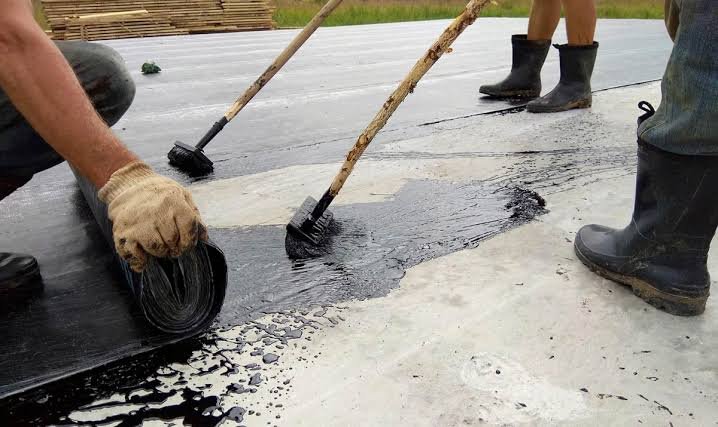
Bitumen waterproofing uses bitumen, a dark, sticky by-product of crude oil refining. Common forms in India include:
- APP-modified bitumen membranes, usually around 3 to 4 mm thick, rolled out and bonded with a gas torch
- SBS-modified membranes, which stay more flexible in cold conditions
- Liquid bituminous coatings, applied cold by brush or spray, often used below ground
Cementitious waterproofing is a cement-based mix, usually combined with a liquid polymer such as acrylic or SBR. Common types include:
- Two-component polymer-modified coatings, brushed on in two coats
- Flexible cementitious coatings, with higher polymer content so they can stretch slightly
- Crystalline coatings, which react with moisture to block pores inside concrete
Why Flexibility Matters on Indian Roofs
Concrete expands and contracts with temperature. Here’s how much that movement adds up to on a terrace.
Concrete expands by roughly 10 to 12 millionths of its length for every degree Celsius. In an Indian summer, a terrace surface can swing from around 20°C at night to 60°C or more under afternoon sun, a change of about 40°C.
For a 10-metre-long terrace, that means: 10,000 mm × 0.000012 × 40 ≈ 4.8 mm of movement every day.
A few millimetres may sound small, but repeated daily through the year, it opens and closes hairline cracks. Rigid coatings tend to crack along with the concrete. Flexible bitumen membranes and elastomeric coatings stretch with that movement, which is why they’re preferred for exposed roofs.
Sunlight and Heat
Bitumen membranes resist water extremely well but degrade under direct sunlight over time. Unprotected black membranes also absorb heat, warming the rooms below. That’s why APP membranes on terraces are usually covered with a protective screed, tiles or a reflective coating, or bought with a mineral-coated surface.
Cementitious coatings are lighter in colour and don’t degrade in sunlight the same way, but standard rigid grades can crack on large exposed roofs. Flexible cementitious coatings with a protective topcoat perform better on smaller terraces and balconies.
Where Each Performs Best
Terraces and Roofs
Bitumen membranes with a protective layer are a strong, long-lasting choice for large flat roofs, especially where the terrace isn’t used heavily. Flexible cementitious or elastomeric coatings work for smaller roofs and areas that need regular inspection.
Bathrooms, Kitchens and Balconies
Cementitious waterproofing is the standard choice for wet areas. It bonds well with concrete and tile adhesive, wraps neatly around pipes and floor traps, and can be tiled directly over. Bitumen isn’t suitable under bathroom tiles, since tile adhesives don’t bond well to it.
Water Tanks and Sumps
Use cementitious or crystalline products certified as safe for potable water. Most bitumen products aren’t suitable for drinking water storage.
Basements and Foundations
Bitumen membranes or bituminous coatings on the outer face of foundation walls and retaining walls give excellent protection against groundwater. Crystalline cementitious systems are also used, especially on the inside face where outside access isn’t possible.
Application and Skill
Bitumen membranes need trained applicators. Torching requires care, a completely dry surface and properly sealed overlaps between sheets. Poorly torched joints are a common source of leaks. Torching near wooden structures, cables or gas lines needs extra caution.
Cementitious coatings are simpler to apply, with brushes or trowels, and don’t need heat. However, they still demand careful work: cleaning the surface thoroughly, filling cracks, forming rounded fillets where walls meet floors and applying coats at the recommended thickness.
In both cases, surface preparation is often half the job. Shortcuts at this stage cause many leaks within a few years.
Cost for a 1,000 sq ft Terrace
Indicative 2026 rates, including labour, place brush-applied cementitious waterproofing at roughly ₹50 to ₹100 per square foot and APP bitumen membrane systems at roughly ₹100 to ₹250 per square foot, depending on brand, thickness and protection layers.
For a 1,000 sq ft terrace:
- Cementitious system at about ₹75 per sq ft: roughly ₹75,000
- APP membrane at about ₹150 per sq ft: roughly ₹1.5 lakh
A protective screed or tiles over the membrane adds further cost. While bitumen costs more upfront, a well-protected membrane often lasts longer on exposed roofs.
Other Options Worth Knowing
- PU (polyurethane) liquid membranes: seamless, highly flexible and UV-resistant, often costing more than APP membranes. Popular for terraces with complex shapes.
- Acrylic elastomeric roof coatings: reflective, flexible and easy to recoat, good for maintenance on existing roofs.
- Integral waterproofing admixtures: added to concrete during construction to reduce permeability from within.
Signs of a Good Job
- Cracks and joints filled before coating
- Rounded fillets at wall-floor junctions
- Pipes and drain outlets carefully sealed
- Membrane laps of adequate width, firmly bonded
- A water ponding test for 24 to 48 hours before tiling or screeding
- A written warranty from the applicator or brand
FAQs
Q1. Which is better, bitumen or cementitious waterproofing?
A: Bitumen membranes suit exposed roofs and foundations, while cementitious coatings suit bathrooms, kitchens, balconies and water tanks.
Q2. Can tiles be laid over bitumen waterproofing?
A: Tiles don’t bond well directly to bitumen, so cementitious waterproofing is preferred under tiles.
Q3. Does bitumen waterproofing need protection from sunlight?
A: Yes, a protective screed, tiles or reflective coating extends its life on terraces.
Q4. Is cementitious waterproofing safe for water tanks?
A: Yes, when using products certified for potable water.
Q5. Why does waterproofing crack on terraces?
A: Daily temperature changes make concrete expand and contract, which cracks rigid coatings.
Q6. How long does terrace waterproofing last?
A: Well-applied branded systems often last around 10 to 15 years, depending on protection and maintenance.