 By Saurav Mehra
The answer splits sharply depending on where it happens. In schools and childcare institutions, corporal punishment is clearly and categorically illegal. At home, it sits in a genuine legal grey zone — not explicitly banned, but increasingly restricted and scrutinized by courts, with the legal space for it shrinking year by year. Here’s exactly how Indian law treats each setting.
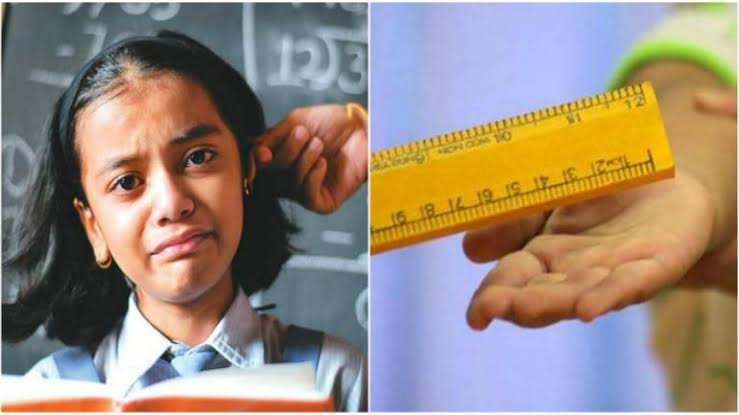
Schools: An Absolute, Unambiguous Ban
If there’s one part of this topic with no real legal debate, it’s this one. Corporal punishment in Indian schools is explicitly prohibited, and has been for over a decade.
The core law: Section 17 of the RTE Act, 2009
The Right of Children to Free and Compulsory Education Act, 2009 places an absolute prohibition on physical punishment and mental harassment of children in schools. This isn’t a soft guideline — it’s categorical, and it covers:
- Government schools
- Aided private schools
- Unaided private schools
The law isn’t limited to caning, slapping, or hitting with an object. It explicitly extends to mental harassment as well, meaning things like public humiliation, extended standing as punishment, or verbal abuse can also fall within its scope, not just direct physical violence. Some legal commentary notes that even acts like forcing a child to hold their ears as punishment have been treated as falling under this prohibition.
Backed by multiple other laws
This isn’t standing on just one statute:
- The Juvenile Justice (Care and Protection of Children) Act, 2015 separately prohibits corporal punishment in “alternative care settings” for children — this extends the ban beyond ordinary schools into institutions providing care, custody, or shelter to children.
- Article 21 of the Constitution (the right to life and personal dignity) has been invoked by courts to reinforce that corporal punishment is fundamentally incompatible with a child’s dignity — notably, the Chhattisgarh High Court observed that subjecting a child to corporal punishment “in the name of discipline or education is cruel,” and that being a child doesn’t make someone “less human” than an adult.
- The Supreme Court of India, as early as 2000 in the Parents Forum for Meaningful Education case, condemned corporal punishment in schools and directed that it be outlawed.
- India’s status as a signatory to the UN Convention on the Rights of the Child (UNCRC) further anchors this policy in international legal commitments the country has formally accepted.
What happens if a school violates this
Violating the ban can lead to a range of consequences depending on severity:
- Disciplinary action against the teacher or staff member — warnings, suspension, or termination
- Criminal liability under the Bharatiya Nyaya Sanhita (BNS), which replaced the IPC in 2023, for offences like causing hurt, if the physical act meets that threshold
- Complaints can be filed with the National Commission for Protection of Child Rights (NCPCR), which oversees implementation of child protection laws and specifically accepts complaints related to school corporal punishment
The bottom line for schools: there is no legal cover whatsoever for corporal punishment “for discipline.” No school in India has legal authority to permit or excuse it, regardless of the student’s age or the severity of their misbehavior.
At Home: A Genuine Legal Grey Zone
This is where the picture becomes considerably more complicated, and it’s the part most people searching this question are actually curious about.
- There is no specific law in India that explicitly bans parents from physically disciplining their children at home. This is widely acknowledged as a genuine gap in India’s child protection framework, flagged repeatedly by child rights organizations.
- Historically, parental physical discipline has sometimes been shielded under the concept of “good faith” action for a child’s benefit — a defense that exists in a limited, narrowing form under Indian criminal law, but which does not provide blanket legal protection for any level of physical punishment.
- If physical punishment crosses into actual abuse or serious injury, it becomes a criminal offence under multiple provisions of Indian law — regardless of the “parent disciplining their child” framing. Serious physical harm to a child is treated as a criminal matter, not a private family affair, once it meets the threshold of genuine injury or cruelty.
- Statistics cited in recent commentary suggest around 60% of children aged 2-14 in India regularly experience some form of physical punishment from parents or caregivers, reflecting how deeply normalized this remains culturally, even as the legal trend moves against it.
- There is no statutory definition of “corporal punishment” specifically targeting children in Indian law, which contributes to this ambiguity — without a clear legal definition, there’s no bright line distinguishing an acceptable “mild tap” from an illegal act, which makes home enforcement genuinely inconsistent and case-dependent.
The trajectory is clear, even if the destination isn’t reached yet. Legal commentary consistently describes Indian law as moving steadily toward full prohibition of corporal punishment in all settings, not just schools — but as of now, that blanket statutory ban for the home specifically does not yet exist.
Recent Court Developments (2025-2026)
Courts have continued to push this issue, even without a new comprehensive statute:
- In February 2026, the Kerala High Court, in Sibin S.V. v. State of Kerala, observed that teachers should avoid physical punishment, reinforcing the school-level prohibition, while the ruling itself did not extend to making home corporal punishment newly illegal — it reaffirmed existing restrictions rather than creating new ones.
- The replacement of the IPC with the Bharatiya Nyaya Sanhita (BNS), 2023 carried forward the relevant provisions around hurt, cruelty, and child protection that can apply when home discipline crosses into clear abuse, though it didn’t introduce a specific, standalone ban on ordinary parental physical discipline.
What This Means in Practice
- If you’re a teacher, school administrator, or run any childcare institution, there is zero legal ambiguity: corporal punishment of any kind — physical or the broader category of mental harassment — is illegal, full stop, under the RTE Act and JJ Act.
- If you’re a parent, Indian law does not currently provide you a specific statutory shield for physical discipline, but it also doesn’t explicitly criminalize mild physical discipline the way it does school-based punishment. The legal risk escalates sharply, however, the moment physical punishment causes real injury or constitutes sustained cruelty — at that point, it’s unambiguously a criminal matter regardless of the parent-child relationship.
- The direction of the law is toward tighter restriction, not looser enforcement. Anyone assuming home discipline exists in a permanent, stable legal safe harbor should recognize that courts and policymakers are actively narrowing that space.
Frequently Asked Questions
Q1. Can a teacher legally punish a student physically if the school has its own disciplinary policy allowing it?
A: No — no school policy can override the RTE Act’s absolute prohibition on corporal punishment; Section 17 applies regardless of what any individual school’s internal rules claim to permit.
Q2. Is it illegal for a parent to spank their child at home in India?
A: There’s no specific statute explicitly banning this, which is why it’s described as a legal grey zone, but this doesn’t mean unlimited physical discipline is protected — if it causes genuine injury or constitutes sustained cruelty, it becomes a criminal matter under general child protection and criminal law provisions.
Q3. What should I do if I know a school is still using corporal punishment on students?
A: You can file a complaint with the National Commission for Protection of Child Rights (NCPCR), which specifically oversees enforcement of child protection laws including the ban on corporal punishment in schools, or approach state-level child welfare authorities.
Q4. Does India have any plans to pass a specific law banning corporal punishment at home?
A: While no such law currently exists, legal commentary and the broader policy trajectory — including India’s UNCRC commitments and ongoing judicial observations — suggest the country is moving toward eventually extending a full prohibition beyond schools and institutions into the home, though this has not yet happened as formal legislation.