 By Saurav Mehra
Yes, owning a crossbow in India is generally legal, and you don’t need a license to buy or possess one. This surprises a lot of people who assume anything that fires a projectile with lethal potential must be tightly regulated the way firearms are. The reason crossbows escape that regulation comes down to a specific technical definition in Indian law — and understanding that definition also clarifies exactly where the legal protection stops.
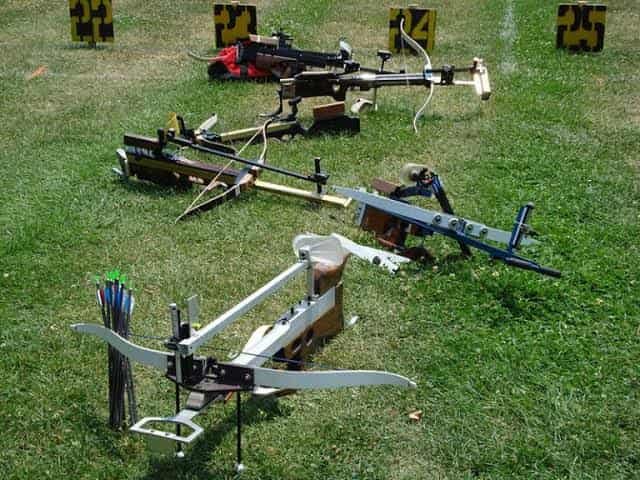
Why Crossbows Fall Outside the Arms Act, 1959
India’s primary law governing weapons is the Arms Act, 1959, which regulates the acquisition, possession, manufacture, sale, import, export, and transport of “arms” and “ammunition” in the country. The critical detail is how the Act defines a “firearm”:
Section 2(e) of the Arms Act defines “firearms” as arms designed or adapted to discharge a projectile by the action of any explosive or other forms of energy.
A crossbow works through mechanical tension stored in a drawn bowstring — there’s no explosive charge or combustion involved. Because of this, legal commentary and even industry figures like the president of the Crossbow Shooting Association of India have stated plainly that crossbows don’t fall under the purview of the Arms Act, which is why they’re treated as legal to own without a firearms-style license.
Where Crossbows Technically Sit in the Law
Crossbows are generally understood to fall into a category sometimes referred to as “arms other than firearms” — a classification that also covers things like air rifles and air pistols. For this category, the general rule is:
- No license is required to buy or hold one, under ordinary circumstances
- A license only becomes necessary if the central government specifically notifies that requirement for a particular area under Section 4 of the Arms Act
In practice, this means a crossbow is treated more like a piece of sporting equipment than a regulated weapon — similar to how a bow and arrow is treated. In fact, Indian law draws essentially no distinction between a traditional bow and a crossbow for licensing purposes; both are excluded from the Arms Act’s core definitions in the same way.
Buying and Importing a Crossbow
Based on how the market has operated for years, buying a crossbow in India doesn’t typically require producing a license at the point of sale. Sporting goods retailers specializing in archery equipment have sold crossbows without requesting any firearms-style documentation, consistent with the legal position that crossbows aren’t classified as firearms.
Importing one follows a similar logic:
- Crossbows are commonly imported and categorized as “Sports Goods – Archery” for customs purposes, rather than as weapons or firearms.
- Since bows and crossbows aren’t classified as “arms” under the objectives of the Arms Act, 1959, there’s generally no special import license required the way there would be for an actual firearm.
- That said, general customs duties and import regulations still apply the way they would to any imported sporting good, so it’s worth confirming current customs classifications and duty rates before ordering one from abroad.
Legal Doesn’t Mean Unrestricted: Where the Real Limits Kick In
This is the part people most often miss. Just because a crossbow doesn’t require a license doesn’t mean you can do whatever you want with it. Several other legal frameworks become relevant depending on how and where you use it.
Hunting is heavily restricted. Using a crossbow to hunt wild animals runs directly into the Wildlife Protection Act, 1972, which bans hunting of most wild species outright, regardless of what weapon is used. A crossbow being “legal to own” says nothing about whether it’s legal to use it to kill or capture wildlife — that’s governed entirely separately, and in nearly all cases across India, hunting with any weapon, including a crossbow, is prohibited without very specific, rare government authorization.
Carrying one in public can still create legal exposure. Even without a formal “crossbow law,” a crossbow can reasonably be treated as an offensive weapon if carried or used in a threatening or dangerous manner. General criminal law provisions around carrying weapons with intent to cause harm, causing public alarm, or threatening someone can apply to a crossbow just as they would to any object capable of causing serious injury. The sensible legal principle here, often summarized in commentary on this topic, is that a bow or crossbow should only be carried or used for a lawful, proper, and sufficient purpose — like traveling to a sanctioned archery range or practicing at a private property with adequate safety measures — not displayed or carried around in public without clear context.
Using it to injure or threaten someone invites serious criminal liability. If a crossbow is used to cause harm to a person, this triggers provisions under the Bharatiya Nyaya Sanhita (the criminal code that replaced the IPC), covering assault, grievous hurt, or worse, with penalties scaling according to the severity of the harm caused — entirely independent of whether the crossbow itself was legally owned.
Local and state-level rules can still apply. While there’s no central crossbow-specific statute, some sources note the possibility of state or local restrictions on use in public spaces, so it’s worth checking with local authorities, especially if you intend to use the crossbow somewhere outside a private, controlled setting like a dedicated archery range or your own enclosed property.
The Practical Picture for a Genuine Archery Enthusiast
If your interest in a crossbow is sport, target practice, or collecting:
- You can generally purchase and own one without a license
- Use it at a private, controlled location — your own property with appropriate safety measures, or a dedicated archery/shooting range
- Keep it stored safely and avoid carrying it in public without clear, lawful purpose
- Don’t use it for hunting, since this is restricted under wildlife protection law regardless of the weapon used
- Understand that misuse carries the same criminal consequences as misusing any dangerous object, license or no license
Frequently Asked Questions
Q1. Do I need any kind of permit to import a crossbow from another country into India?
A: Generally no special weapons import license is required, since crossbows are typically classified under sporting goods/archery equipment for customs purposes rather than as arms, though standard customs duties and documentation for imported goods still apply.
Q2. Can I use a crossbow for hunting in India if I own it legally?
A: No — hunting wild animals is broadly prohibited under the Wildlife Protection Act, 1972, regardless of what weapon is used, so owning a crossbow legally does not give you any separate right to hunt with it.
Q3. Is there a minimum age requirement to buy or own a crossbow in India?
A: Unlike some countries (the UK, for example, has a specific Crossbows Act setting an age limit), India doesn’t appear to have a dedicated crossbow law setting a specific minimum age, though retailers may apply their own age-related sales policies, and general laws around minors and weapons could still be relevant depending on circumstances.
Q4. Could I get into legal trouble just for carrying a crossbow in public, even without using it?
A: Potentially, yes — while owning one isn’t illegal, carrying it in public without a clear, lawful reason could be viewed as carrying an offensive weapon, especially if it causes alarm or is perceived as threatening, so it’s advisable to transport and use a crossbow only in appropriate, controlled settings.