 By Subhash Kumar
 You’ve just moved to Bengaluru or Pune for that dream job, your PG room has a shared bathroom, a roommate you barely talk to, and a WiFi password you got from the caretaker on day one. Your calendar is packed, back-to-back meetings, a two-hour commute, maybe a gym membership you’re too tired to use. And yet, somewhere around 9 PM, scrolling through your phone in a room that still doesn’t feel like yours, a quiet, heavy feeling settles in. You’re surrounded by people all day, and somehow, you’ve never felt more alone.
This isn’t a personal failing, and you’re genuinely far from the only one experiencing it. A survey across Indian firms found that 56% of working professionals openly admit to feeling lonely, with another 23% feeling it but not saying so out loud. Millions of young Indians now live in exactly this setup, transient PG accommodations in fast-paced cities, doors that stay closed, lives running parallel to each other without ever quite intersecting. Understanding why this happens, and what genuinely helps, matters more than most people realise, especially when the loneliness of urban PG life has become so common it barely gets talked about anymore.
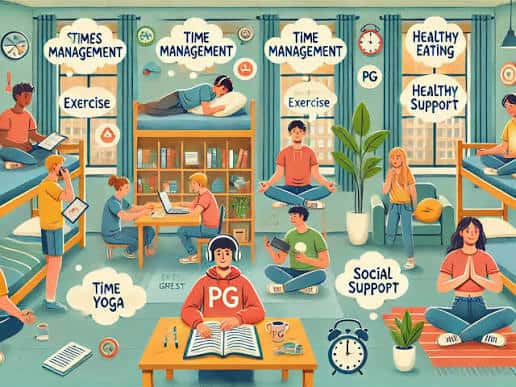
Understand That This Is a Design Problem, Not a You Problem
Before anything else, it helps to reframe what’s actually happening. Loneliness in urban PGs isn’t a reflection of something wrong with you personally, it’s largely the outcome of how modern city living is structured. Gated buildings, vanishing public parks, transient PG setups where nobody stays long enough to build real familiarity, all of this has quietly eliminated the accidental, unplanned encounters that once built community without anyone having to try particularly hard.
Add to this the erosion of the joint family safety net most of us grew up around, and the reality that many PG residents are managing this transition entirely without the informal support systems their parents took for granted. Recognising this as a structural pattern, rather than a personal shortcoming, is genuinely the first step toward addressing it without piling shame on top of an already difficult feeling.
Notice the Difference Between Being Alone and Feeling Lonely
This distinction matters more than people realise. Solitude, simply being physically alone, isn’t inherently distressing, and plenty of people genuinely enjoy quiet evenings by themselves. Loneliness is different, it’s a subjective, uncomfortable feeling that comes from a mismatch between the connection you actually want and the connection you’re currently getting.
You can technically live with a PG roommate, work alongside colleagues all day, and still feel genuinely lonely if none of those interactions carry any real depth or emotional presence. Recognising this distinction helps you identify what you’re actually missing, is it deep conversation, physical touch and comfort, a sense of being truly known by someone, rather than assuming more social contact alone will automatically fix the feeling.
Question Whether Social Media Is Actually Connecting You
Here’s something worth being honest with yourself about. Constant scrolling feels like connection in the moment, but psychologists increasingly describe this as “performative intimacy,” you share everything, accumulate likes and reactions, and somehow still feel entirely invisible underneath it all. Social media rewards performance and visibility, not genuine presence, and for many PG residents, hours spent scrolling each evening quietly replace the actual conversations that would genuinely ease the loneliness.
This doesn’t mean deleting every app overnight. It means noticing honestly whether your evening scroll session is genuinely making you feel more connected, or simply filling time while the underlying feeling stays exactly where it was. If it’s the latter, that awareness alone is useful, since it tells you where your energy might be better spent instead.
Build Small, Repeatable Rituals With the People Already Around You
You don’t need to make five best friends immediately to feel less alone, small, consistent interactions genuinely add up more than people expect. If your PG has a common dining area, actually eating there instead of retreating straight to your room creates repeated, low-pressure opportunities to build familiarity with the people you already share a roof with.
The same applies at work. Rather than eating lunch alone at your desk scrolling through your phone, joining even one colleague for a genuine, non-work conversation regularly builds the kind of casual, spontaneous connection that structured meetings simply don’t provide. These small rituals feel unremarkable in the moment, but they’re exactly what quietly rebuilds the sense of belonging that transient city living tends to strip away.
Find or Create a “Third Place” Outside Work and Your Room
Sociologists use the term “third place” for spaces that aren’t home or work, a gym, a hobby class, a neighbourhood chai stall you visit regularly, a weekend community event, spaces where you show up repeatedly enough that familiar faces start to feel genuinely familiar. Many young professionals in Indian metros have professional fulfilment but genuinely lack these casual, spontaneous social spaces that build real emotional resilience over time.
This doesn’t need to be elaborate or expensive. A weekly badminton game, a regular Sunday market visit, a local book club, or even a recurring class at a nearby studio all serve this function, provided you actually show up consistently rather than treating it as a one-time experiment you abandon after the first awkward session.
Talk About It, Even If It Feels Uncomfortable at First
A significant barrier to addressing loneliness in India is the quiet cultural shame attached to admitting it exists at all. Many people, particularly men who face intense pressure to appear self-sufficient, genuinely struggle to name what they’re feeling, let alone say it out loud to someone else. Families often avoid these conversations entirely, and workplaces frequently dismiss loneliness as a purely personal issue rather than something worth genuinely acknowledging.
Breaking this silence, even in a small way, calling a friend from home just to talk rather than for a specific reason, telling a colleague you’re finding the transition harder than expected, genuinely helps. You don’t need a dramatic confession, simply naming the feeling out loud to one trusted person often reduces its weight considerably more than carrying it silently ever does.
Know Where to Turn If It Starts Feeling Heavier Than Just Loneliness
It’s worth being clear-eyed here: persistent loneliness genuinely can contribute to anxiety, low mood, and burnout over time, and it’s not something to simply push through indefinitely if it’s significantly affecting your daily functioning. If what you’re feeling starts extending beyond occasional low moments into something that feels genuinely heavy or persistent, reaching out to a mental health professional is a reasonable, sensible step, not a sign of weakness.
India’s Tele-MANAS programme offers free mental health counselling support across the country and can be a genuinely accessible starting point if private therapy feels financially out of reach right now. This is a sensitive topic worth taking seriously rather than dismissing, and if you’re personally finding this genuinely difficult to manage on your own, it’s worth talking to someone qualified who can support you properly.
Frequently Asked Questions
Q1. Is it normal to feel lonelier in a big city than I did back home, even though I’m meeting more people than ever?
Yes, this is genuinely common and reflects how urban life is structured rather than any personal failing on your part. Meeting more people doesn’t automatically mean deeper connection, and many young professionals in Indian metros report feeling more isolated precisely because their interactions, while frequent, lack the depth that hometown relationships naturally had.
Q2. My PG roommate and I barely talk. How do I break that ice without it feeling forced?
Start with small, low-pressure moments rather than a big deliberate conversation, offering to share food, asking about their day casually, or simply eating in the common area instead of your room. Genuine familiarity usually builds gradually through repeated small interactions rather than one significant effort.
Q3. I’ve tried joining hobby groups before but stopped going after a few weeks. How do I actually stick with it?
This is genuinely common, and the key is picking something with a consistent, recurring schedule rather than a one-off event, since showing up repeatedly is what actually builds familiarity with the same faces over time. It also helps to lower the pressure of needing to immediately click with people, comfort tends to build gradually rather than instantly.
Q4. How do I know if what I’m feeling is just loneliness or something that needs professional help?
If your feelings are occasional and tied to specific moments, like evenings alone in your room, that’s common everyday loneliness worth addressing through the practical steps above. If it’s persistent, affecting your sleep, appetite, or ability to function at work over an extended period, that’s worth discussing with a mental health professional, since ongoing support can help far more than trying to manage it entirely alone.