 By Saurav Mehra
 For Indian bike owners, petrol is not just fuel—it is a monthly expense, a daily worry and sometimes a roadside headache. Every commuter who rides to office, college, shop, delivery route or coaching class knows how much fuel cost affects the pocket. Now, with E20 petrol becoming common across India, many old bike owners are asking a practical question: “Can my old bike safely run on E20 fuel?”
This question is important because India has millions of older motorcycles and scooters still running every day. Many families use 8-year-old, 10-year-old or even 15-year-old bikes because they are reliable, affordable and easy to repair. A Splendor, Passion, Activa, Pulsar, Apache, Discover, Unicorn, Shine, Access or old scooter may still be doing daily duty. But if the engine was originally designed for lower ethanol blends, owners naturally worry about mileage drop, fuel pipe damage, carburettor issues, rust, engine knocking or long-term reliability.
The good news is that most modern bikes sold in recent years are designed to handle E20 petrol. The confusing part is older bikes. Some may run without major issues, while others may need closer inspection and small part replacements over time. The safest approach is not panic, but awareness. If you understand what E20 does, what signs to watch, and how to maintain your bike, you can protect your engine better.
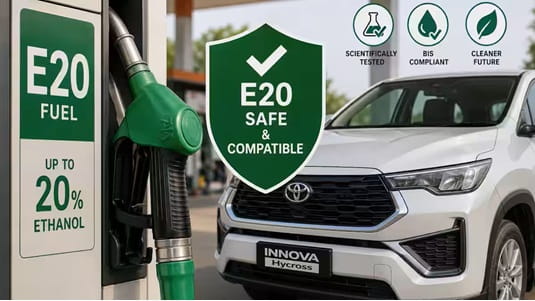
What Is E20 Fuel?
E20 fuel is petrol blended with 20% ethanol and 80% petrol. Ethanol is an alcohol-based fuel component, usually made from agricultural sources such as sugarcane, maize or other biomass-based materials.
India is increasing ethanol blending to reduce crude oil imports, support farmers and reduce certain emissions. This is why E20 fuel is now becoming more common at petrol pumps.
For the rider, E20 looks and smells almost like normal petrol. You simply fill it from the petrol pump. But inside the engine and fuel system, ethanol behaves slightly differently from pure petrol or lower ethanol blends.
Why E20 Compatibility Matters for Bikes
A bike’s fuel system includes fuel tank, fuel pump or carburettor, fuel pipes, rubber seals, gaskets, injector, filters and engine tuning. These parts must tolerate the fuel passing through them.
Ethanol can interact differently with some rubber, plastic and metal parts, especially in older vehicles that were not designed with higher ethanol blends in mind. It can also absorb moisture more easily than petrol, which may create storage-related issues if the bike is parked unused for long periods.
This does not mean E20 will instantly damage every old bike. But compatibility matters because long-term exposure can affect certain parts if they are already old, weak or made from older materials.
Are New Bikes Safe With E20?
Most new-generation bikes and scooters sold in India are E20-ready or E20-compliant, especially models updated as per recent emission and fuel compatibility requirements. These vehicles use fuel-system parts designed to handle petrol blended with up to 20% ethanol.
If your bike is new or recently purchased, check the owner’s manual, fuel tank sticker or manufacturer website. You may find E20 compatibility clearly mentioned.
For such bikes, E20 fuel should not be a major worry if you service the vehicle on time and use fuel from trusted petrol pumps.
What About Older Bikes?
Older bikes need more attention. If your bike was manufactured many years ago, especially before E20 planning became common, it may not have been designed specifically for 20% ethanol petrol.
The main concern is not that the engine will fail immediately. The concern is that some rubber pipes, seals, gaskets, carburettor parts or fuel-system components may age faster. If these parts are already cracked, hard, swollen or weak, E20 may expose the problem sooner.
Old bikes with carburettors may also behave differently compared to fuel-injected bikes. They may need cleaning, tuning or part replacement if starting trouble, rough idling or mileage drop appears.
Carburettor Bikes Need Special Care
Many older motorcycles in India use carburettors instead of fuel injection. Carburettors are simple and repair-friendly, but they can be sensitive to fuel quality, dirt and deposits.
Ethanol-blended fuel can clean old deposits from the fuel system, which sounds good, but loosened dirt may sometimes block jets or filters. If your old bike starts jerking, idles unevenly or struggles after filling E20, the carburettor may need cleaning.
Do not keep adjusting the carburettor randomly at roadside workshops. Get it checked by a trusted mechanic who understands your bike model. Proper jet cleaning, air filter condition and spark plug health matter a lot.
Fuel-Injected Bikes Handle E20 Better
Fuel-injected bikes usually manage fuel delivery more accurately than carburettor bikes. Sensors and the engine control unit adjust fuel flow better under different conditions.
Modern fuel-injected bikes designed for E20 are generally safer and smoother with ethanol-blended petrol. However, even fuel-injected bikes need clean fuel, proper service and healthy fuel pumps.
If your older fuel-injected bike is not officially E20-compliant, check with the authorised service centre. They can tell whether any fuel-system parts need inspection or replacement.
Will E20 Reduce Bike Mileage?
Many riders may notice a slight mileage difference with E20. Ethanol has lower energy content than petrol, so fuel economy can reduce slightly in some vehicles, especially older ones not tuned for E20.
However, real-world mileage depends on many things—traffic, tyre pressure, riding style, air filter, chain condition, engine oil, pillion load, road quality and AC-like load does not apply to bikes, but engine load certainly does.
If your bike mileage drops suddenly by a large amount, do not blame E20 immediately. Check tyre pressure, spark plug, air filter, chain lubrication, brake drag and fuel leakage first.
A small mileage change may be normal. A big drop needs inspection.
Can E20 Damage the Engine?
In most cases, the engine itself is not the first part to worry about. The earlier risk is usually in fuel-system rubber parts, seals, gaskets and old carburettor components.
If water contamination, poor maintenance or degraded parts are present, problems can increase. If fuel lines become brittle or cracked, leakage can happen. If carburettor jets get clogged, running quality can suffer.
For old bikes, the safe approach is preventive maintenance. Replace old fuel pipes, check gaskets, clean the carburettor, inspect the tank and keep the bike serviced.
Watch for These Warning Signs
If your old bike is not comfortable with E20 or has weak fuel-system parts, it may show signs. Watch for hard starting, rough idle, jerking, sudden mileage drop, petrol smell, fuel leakage, engine hesitation, knocking sound, frequent stalling or poor pickup.
Also check rubber fuel pipes visually. If they look cracked, swollen, sticky or dry, replace them. Fuel leakage is a safety risk and should never be ignored.
If the bike was running fine and suddenly behaves badly after repeated E20 use, get it inspected instead of continuing to ride casually.
Storage Is Important for Less-Used Bikes
Ethanol can absorb moisture from air. If your bike is used daily, fuel keeps moving and fresh petrol is added often. But if the bike is parked for weeks or months, fuel quality may degrade.
This is important for old scooters, rarely used second bikes, college bikes parked during holidays, or vehicles used only for short market trips.
If you do not use the bike regularly, avoid keeping old fuel in the tank for too long. Start and ride the bike periodically, or keep fuel level sensible instead of storing a full tank for months.
Old Two-Stroke Bikes Need Extra Caution
If you own an old two-stroke bike or scooter, be more careful. Two-stroke engines depend on correct fuel-oil mixture and may have older rubber and carburettor components.
Many such vehicles are already aged, and their fuel systems may not be in original condition. E20 may not be ideal for them without inspection.
For vintage or classic bikes, speak to a specialist mechanic. Do not experiment with additives or random tuning. Old engines need model-specific care.
Should You Use Additives?
Avoid random fuel additives unless recommended by the manufacturer or a trusted expert. Many additives promise mileage improvement, engine cleaning or ethanol protection, but not all are suitable for every bike.
Wrong additives can affect fuel lines, spark plugs, injectors or carburettors. For most daily-use bikes, proper servicing is safer than using unknown chemicals.
If you are worried about E20, first inspect fuel pipes, clean the carburettor or injector system, check spark plug and confirm manufacturer guidance.
Use Trusted Petrol Pumps
Fuel quality matters even more when you own an old bike. Fill from reliable petrol pumps with good turnover. Avoid pumps where fuel contamination, water mixing or poor maintenance is suspected.
Do not repeatedly fill tiny amounts from random locations if you can avoid it. Fresh, clean fuel reduces the chance of carburettor blockage and rough running.
If your bike starts misbehaving soon after refuelling, note the petrol pump and get the fuel system checked.
Maintenance Tips for Old Bikes Running on E20
Replace old fuel pipes if they are hard or cracked. Check gaskets and seals during service. Clean the carburettor if starting or idling becomes poor. Replace the fuel filter if fitted. Keep the air filter clean. Use the correct engine oil. Maintain spark plug health. Keep tyre pressure correct so mileage loss is not wrongly blamed on fuel.
Also lubricate and adjust the chain properly. A dry or tight chain reduces mileage and performance. Many riders blame petrol quality when the real problem is poor basic maintenance.
How to Check If Your Bike Is E20-Compatible
The easiest method is to check your owner’s manual or fuel tank area for E20 marking. If you do not have the manual, check the manufacturer’s official website or call the authorised service centre with your bike model and manufacturing year.
Do not rely only on social media forwards. Compatibility can differ by brand, model and year.
If your bike is old and the service centre cannot clearly confirm E20 compatibility, ask whether any fuel-system parts should be replaced as preventive care.
Should You Sell Your Old Bike Because of E20?
Not necessarily. If your old bike is running well, parts are available, and maintenance cost is reasonable, you may continue using it with proper care.
But if the bike is very old, frequently breaks down, gives poor mileage, has fuel leaks, rusted tank, repeated carburettor problems or expensive repairs, E20 may be one more reason to consider upgrading.
Do not sell in panic. First inspect, service and understand the bike’s condition.
Practical Safety Checklist for Old Bike Owners
Check E20 compatibility from the manufacturer or service centre. Inspect fuel pipes and replace weak rubber parts. Keep the carburettor or fuel injector clean. Avoid storing old fuel for long periods. Fill from trusted petrol pumps. Watch for leakage, rough running and sudden mileage drop. Service the bike regularly and avoid random additives.
This simple checklist can help old bikes handle changing fuel conditions better.
FAQs
Q1. Is E20 fuel safe for old bikes?
E20 may be safe for many bikes, but older models not designed for 20% ethanol need extra care. Rubber fuel pipes, gaskets, seals and carburettor parts should be inspected and replaced if worn.
Q2. How do I know if my bike is E20-compatible?
Check the owner’s manual, fuel tank sticker, manufacturer website or authorised service centre. Give your exact model and manufacturing year for the correct answer.
Q3. Will E20 petrol reduce my bike mileage?
A small mileage drop is possible in some bikes because ethanol has lower energy content than petrol. But riding style, tyre pressure, air filter, chain condition and traffic also affect mileage.
Q4. What should I do if my old bike starts jerking after using E20?
Get the fuel system checked. The carburettor jets, fuel filter, spark plug, air filter or fuel pipes may need cleaning or replacement. Do not keep riding if there is fuel smell or leakage.