 By Subhash Kumar
 When applying for a personal loan, one of the most important decisions borrowers face is choosing between a fixed interest rate and a floating interest rate. While both options help finance personal needs such as medical emergencies, weddings, home renovations, education, or travel, they differ significantly in how interest is calculated and how loan repayments are affected over time.
Understanding the differences between fixed and floating interest rates can help borrowers choose the option that best suits their financial situation and risk tolerance. In this article, we’ll explain both types of interest rates, their advantages and disadvantages, and factors to consider before making a decision.
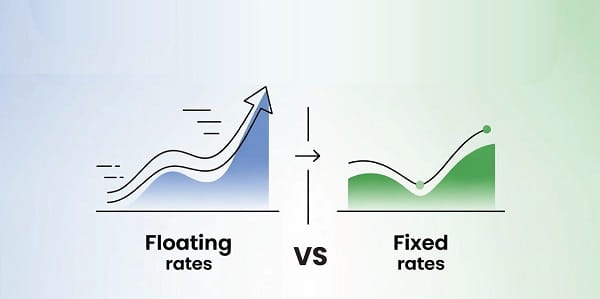
What Is a Fixed Interest Rate?
A fixed interest rate remains constant throughout the loan tenure. Once the lender approves the loan at a specific rate, it does not change regardless of market conditions or fluctuations in benchmark lending rates.
For example, if you take a personal loan of ₹5 lakh at a fixed interest rate of 12% per annum for five years, your interest rate and monthly EMI generally remain unchanged during the loan period.
Advantages of Fixed Interest Rates
1. Predictable EMIs
The biggest benefit of a fixed-rate loan is certainty. Borrowers know exactly how much they need to pay every month.
2. Easier Budgeting
Since EMIs remain stable, financial planning becomes easier, especially for salaried individuals with fixed monthly incomes.
3. Protection from Rising Interest Rates
If market interest rates increase during the loan tenure, borrowers with fixed-rate loans remain unaffected.
Disadvantages of Fixed Interest Rates
1. Higher Initial Rates
Fixed-rate loans often start with slightly higher interest rates compared to floating-rate loans.
2. Limited Benefit from Rate Reductions
Even if market interest rates fall, borrowers generally continue paying the original fixed rate unless refinancing is available.
What Is a Floating Interest Rate?
A floating interest rate, also known as a variable interest rate, changes periodically based on market conditions and benchmark rates used by the lender.
The interest rate is usually linked to an external benchmark such as the lender’s reference rate, repo-linked lending rate, or other market indicators.
For example, if your personal loan is offered at a benchmark rate plus a margin, any change in the benchmark may increase or decrease your loan interest rate.
Advantages of Floating Interest Rates
1. Lower Initial Interest Rates
Floating-rate loans often begin with lower rates than fixed-rate loans, making them attractive to borrowers.
2. Benefit from Falling Rates
If market interest rates decline, your loan rate may decrease, reducing your EMI or loan tenure.
3. Potential Savings
Over the long term, borrowers may pay less interest if interest rates trend downward.
Disadvantages of Floating Interest Rates
1. Uncertain EMIs
Interest rate changes can increase monthly payments, making budgeting more challenging.
2. Higher Financial Risk
Borrowers are exposed to fluctuations in market interest rates throughout the loan tenure.
3. Difficult Long-Term Planning
Future loan costs become less predictable because rates can change multiple times during the repayment period.
Fixed vs Floating Interest Rate: Key Differences
| Feature | Fixed Interest Rate | Floating Interest Rate |
| Interest Rate | Remains constant | Changes with market conditions |
| EMI Stability | Stable | May increase or decrease |
| Budget Planning | Easier | Less predictable |
| Initial Rate | Usually higher | Usually lower |
| Benefit from Rate Cuts | No | Yes |
| Protection from Rate Hikes | Yes | No |
| Risk Level | Lower | Higher |
Which Option Is Better?
The choice depends on your financial goals and risk appetite.
Choose a Fixed Interest Rate If:
- You prefer stable EMIs.
- You have a fixed monthly income.
- You want predictable repayment schedules.
- You expect interest rates to rise in the future.
- You are uncomfortable with financial uncertainty.
Choose a Floating Interest Rate If:
- You can handle changes in EMIs.
- You expect market interest rates to decline.
- You want a lower initial borrowing cost.
- You have flexibility in your monthly budget.
- You are willing to accept some interest rate risk.
Factors to Consider Before Choosing
1. Loan Tenure
For shorter loan tenures, the difference between fixed and floating rates may be minimal. For longer tenures, interest rate movements can significantly impact overall costs.
2. Current Interest Rate Environment
Understanding economic conditions and interest rate trends can help determine which option may be more beneficial.
3. Income Stability
Individuals with stable incomes may comfortably manage floating-rate fluctuations, while others may prefer the certainty of fixed rates.
4. Risk Tolerance
Borrowers who value financial predictability often choose fixed rates, while those seeking potential savings may consider floating rates.
5. Loan Amount
Larger loans are more sensitive to interest rate changes, making the choice of interest type particularly important.
Can You Switch Between Fixed and Floating Rates?
Some lenders allow borrowers to convert a fixed-rate loan into a floating-rate loan or vice versa. However, conversion fees and eligibility conditions may apply.
Before switching, borrowers should evaluate:
- Remaining loan tenure
- Conversion costs
- Current market interest rates
- Potential long-term savings
Conclusion
Choosing between a fixed and floating interest rate is a crucial part of the personal loan decision-making process. Fixed rates offer stability, predictable EMIs, and protection against rising interest rates, making them suitable for borrowers who prefer certainty. Floating rates, on the other hand, provide flexibility and the potential for lower borrowing costs when market rates decline.
The right choice depends on your financial circumstances, income stability, risk tolerance, and expectations regarding future interest rate movements. By carefully evaluating these factors, borrowers can select the loan structure that best aligns with their financial goals and repayment capacity.
Frequently Asked Questions (FAQs)
Q1. What is the main difference between fixed and floating interest rates?
A: A fixed interest rate remains unchanged throughout the loan tenure, while a floating interest rate varies based on market conditions and benchmark rates.
Q2. Which interest rate is usually lower at the beginning?
A: Floating interest rates are generally lower initially compared to fixed interest rates.
Q3. Can my EMI change with a floating-rate personal loan?
A: Yes. Depending on the lender’s policy, your EMI or loan tenure may change when interest rates fluctuate.
Q4. Is a fixed-rate loan completely immune to market changes?
A: Generally, yes. Fixed-rate loans are designed to remain unaffected by market interest rate fluctuations during the agreed loan period.
Q5. Which option is better for salaried employees?
A: Many salaried employees prefer fixed rates because they provide predictable monthly payments and easier budgeting.
Q6. Can I switch from a floating rate to a fixed rate later?
A: Some lenders allow loan conversions, but charges and conditions may apply. Check with your lender before making a decision.
Q7. How do I decide which interest rate option is right for me?
A: Consider factors such as your income stability, risk tolerance, loan tenure, and expectations about future interest rate movements before choosing between fixed and floating rates.