 By Saurav Mehra
 In Indian homes, gut health is usually discussed in very simple language: “pet saaf nahi hai,” “gas ho rahi hai,” “acidity hai,” “digestion weak hai,” or “khana suit nahi kar raha.” But today, many people are realising that digestion is not only about avoiding spicy food or taking antacids. The gut has a whole world of friendly bacteria that can influence digestion, immunity, bloating, bowel movement and even how comfortable we feel after eating.
This is where probiotic foods become useful. The best part is that India already has a rich tradition of fermented and gut-friendly foods. You do not always need imported capsules or expensive supplements. Fresh curd, chaas, fermented batters, kanji, homemade pickles and some newer options like kefir and kombucha can support gut health when used properly.
But there is one important point: not every fermented food is automatically probiotic. If a food is heated, deep-fried, over-processed or loaded with sugar, the live beneficial bacteria may be reduced or destroyed. So, the goal is not just to eat “fermented” food, but to choose the right foods in the right way. Let’s understand the best probiotic foods available in India and how to include them practically in daily meals.
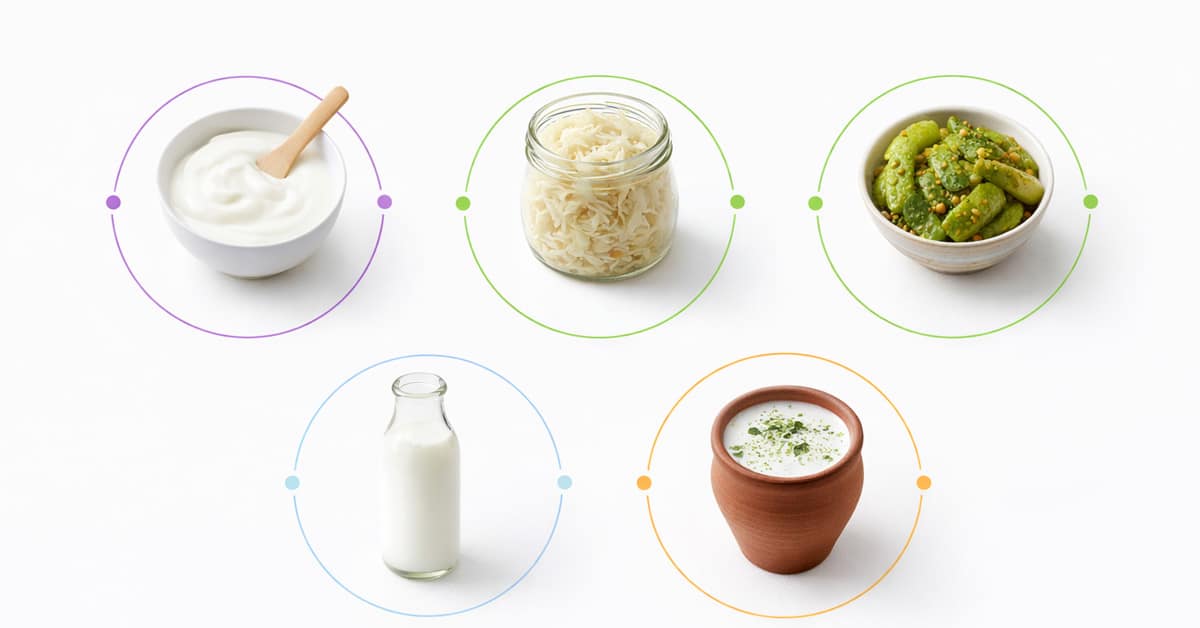
What Are Probiotic Foods?
Probiotic foods contain live beneficial microorganisms that may support the balance of gut bacteria. These friendly bacteria can help digestion, support bowel regularity and may reduce certain digestive issues in some people.
Common probiotic microbes include different types of Lactobacillus, Bifidobacterium and beneficial yeasts. You do not need to remember these names for daily life. What matters is choosing fresh, live-culture foods and eating them consistently in small, suitable amounts.
Probiotics are different from prebiotics. Probiotics are friendly bacteria. Prebiotics are the food that helps good bacteria grow. Indian foods like onion, garlic, banana, whole grains, dal, vegetables and fibre-rich foods can act as prebiotic support.
1. Fresh Homemade Curd
Curd is the most common probiotic-style food in Indian kitchens. It is affordable, easy to prepare and suits many meals. A bowl of fresh curd with dal-rice, roti-sabzi, paratha, khichdi or pulao can make the meal more satisfying and cooling.
Fresh homemade curd contains live cultures if it is properly set and not heated. It may support digestion and can be easier to tolerate than milk for some people because fermentation reduces some lactose.
For best results, eat curd fresh. Avoid very sour curd if you get acidity or loose motions. Do not heat curd if you want probiotic benefits, because heat can reduce live bacteria. Kadhi and curd-based gravies taste good, but they are not the same as eating fresh curd for live cultures.
2. Chaas or Buttermilk
Chaas is one of the most practical gut-friendly drinks for Indian weather. It is lighter than curd, easy to digest for many people and refreshing after lunch.
A simple chaas made with curd, water, roasted jeera, mint, coriander and a little rock salt can be a better option than cold drinks, packaged juices or sugary lassi. It can help reduce heaviness after meals and keep hydration better in summer.
However, people with high blood pressure should avoid adding too much salt. Those who are lactose intolerant or sensitive to dairy should start with a small amount and see how the body responds.
3. Live-Culture Yogurt
Packaged yogurt is easily available in Indian supermarkets, but not every yogurt is equally useful. Some are loaded with sugar, artificial flavours and fruit syrups. These may taste good but are not the best choice for gut health.
Choose plain yogurt with live and active cultures if available. Avoid sweetened flavoured yogurt for daily use. You can add your own fruit, nuts or seeds at home if you want taste.
Plain yogurt can be used in breakfast bowls, raita, smoothies, dips and snacks. But again, do not heat it if you want live culture benefits.
4. Kefir
Kefir is a fermented milk drink that is slowly becoming popular in Indian cities. It is thinner than curd, slightly tangy and usually contains a wider variety of microbes than regular curd.
Kefir may suit people who want a stronger probiotic food, but beginners should start with a small quantity. Too much kefir suddenly may cause gas or bloating, especially if the gut is sensitive.
You can drink plain kefir or add it to smoothies. Avoid sugary bottled versions. If making kefir at home, hygiene is very important because poor handling can spoil the drink.
5. Kanji
Kanji is a traditional North Indian fermented drink, often made with black carrots, mustard seeds, salt and water. It is especially popular in winter and around Holi in many homes.
Kanji has a sharp, tangy flavour and is naturally fermented. When prepared hygienically, it can be a refreshing probiotic-style drink. It is also a good example of how Indian traditional foods already understood fermentation long before modern gut-health trends.
Make kanji in clean glass jars, use safe drinking water and avoid contamination. If it smells rotten instead of pleasantly sour, do not drink it.
6. Fermented Pickles
Indian pickles are fermented in many regions, but not all pickles provide probiotic benefits. Traditional naturally fermented pickles made without vinegar and not heated may contain beneficial microbes. However, many commercial pickles are oil-heavy, salt-heavy, vinegar-based or preserved in a way that may not offer live probiotics.
Pickle should be treated as a small side, not a main probiotic food. Too much pickle can increase salt intake and trigger acidity in some people.
If you eat homemade fermented pickle, take a small amount with meals. People with high BP, kidney problems or acidity should be careful.
7. Idli and Dosa Batter
Idli and dosa batter is fermented, and the fermentation improves taste, texture and digestibility. This makes idli and dosa lighter than many refined-flour breakfast items.
However, once idli is steamed or dosa is cooked on a hot tawa, many live bacteria may not remain. So idli and dosa are fermented foods, but they may not provide the same live probiotic effect as fresh curd or chaas.
Still, they are useful gut-friendly foods because fermentation can make nutrients more available and digestion easier. Idli with sambar is a better breakfast than biscuits or fried snacks for many people.
8. Dhokla and Fermented Batter Foods
Dhokla, handvo and other fermented batter foods are common in western India. Like idli, fermentation improves flavour and digestibility. But after steaming or baking, live probiotic bacteria may reduce.
These foods can still be healthy when made with less oil and eaten fresh. Dhokla with green chutney can be a good snack compared to fried namkeen, but avoid very sweet or oily versions.
9. Kombucha
Kombucha is a fermented tea drink that is now available in many Indian supermarkets and cafes. It has a tangy, fizzy taste and may contain live microbes if unpasteurised.
But kombucha needs caution. Some packaged versions contain added sugar. Homemade kombucha can become unsafe if hygiene is poor. It may also not suit people with acidity, IBS, pregnancy concerns or weak immunity.
If you want to try kombucha, start with a small quantity and choose a trusted brand. Do not treat it like a daily soft drink.
10. Fermented Rice Water and Pakhala-Style Foods
In some parts of India, leftover cooked rice is soaked in water overnight and eaten in traditional forms like pakhala, pazhaya sadam or fermented rice. These foods are linked with regional food wisdom and may support gut comfort for some people.
However, food safety is very important. Fermented rice should be prepared hygienically, stored properly and consumed fresh. In hot weather, unsafe fermentation can lead to spoilage.
People with weak immunity, frequent stomach infections or digestive disorders should be careful and follow safe preparation methods.
How to Add Probiotic Foods to an Indian Diet
Start small. If your gut is not used to fermented foods, suddenly adding curd, kefir, kanji and kombucha together can cause bloating.
Begin with one simple option, such as fresh curd with lunch or chaas after meals. Continue for a few days and observe digestion. If it suits you, keep it regular.
Do not mix too many new foods at once. This makes it difficult to know what is helping and what is causing discomfort.
Best Time to Eat Probiotic Foods
There is no single perfect time for everyone. Many people tolerate curd or chaas better with lunch. Some may prefer yogurt at breakfast. Kefir can be taken as a mid-morning or evening drink.
Avoid very cold probiotic foods if they trigger cough, throat irritation or stomach cramps. Avoid taking heavy curd at night if it causes congestion, acidity or bloating for you.
The best time is the time when it suits your digestion and routine.
Who Should Be Careful With Probiotic Foods?
Most healthy adults can include probiotic foods in moderation. But some people should be careful.
People with severe illness, weak immunity, recent major surgery, serious gut disease, uncontrolled infections or those on specific medical treatments should ask a doctor before taking strong probiotic supplements or unusual fermented foods.
People with IBS should introduce fermented foods slowly because some may trigger gas or bloating. People with lactose intolerance should be careful with curd, yogurt and kefir.
Pregnant women should avoid unsafe homemade fermented drinks and choose hygienic, trusted foods.
Do Probiotic Foods Cure All Gut Problems?
No. Probiotic foods can support gut health, but they are not a cure for every digestive issue. If you have chronic diarrhoea, blood in stool, severe constipation, unexplained weight loss, persistent vomiting, fever or long-term stomach pain, you need medical evaluation.
Gut health also depends on fibre, sleep, stress, water, exercise, medicines, infections and overall diet. Eating curd daily will not fix a lifestyle full of fried food, sugar, poor sleep and stress.
Combine Probiotics With Prebiotic Foods
For better results, combine probiotic foods with fibre-rich Indian foods. Good bacteria need food to grow, and fibre helps support them.
Add vegetables, fruits, dal, oats, barley, millets, whole grains, seeds and nuts in moderate amounts. Banana, garlic, onion, asparagus, whole wheat, chana and rajma can support gut bacteria, but people with IBS may need to choose carefully because some of these can cause gas.
A balanced plate is better than depending only on one probiotic food.
Simple Daily Gut-Friendly Indian Routine
A practical day can include vegetable poha or idli-sambar for breakfast, curd with lunch, chaas in the afternoon, vegetables and dal with dinner, and fruit instead of sugary dessert. Add fermented foods slowly and keep meals fresh.
Avoid too much sugar, deep-fried snacks, excess alcohol, repeated antibiotics without need and ultra-processed foods. These can disturb gut balance.
Good gut health is built through daily habits, not one expensive product.
FAQs
Q1. Is curd the best probiotic food in India?
Fresh homemade curd is one of the easiest and most practical probiotic-style foods in India. It is affordable and suits many meals. However, it should be eaten fresh and not heated if you want live culture benefits.
Q2. Can I eat probiotic foods daily?
Yes, many people can eat probiotic foods daily in moderate amounts. Start with curd or chaas and observe your digestion. If you have IBS, weak immunity or medical issues, introduce them slowly and take medical advice if needed.
Q3. Are idli and dosa probiotic foods?
Idli and dosa batter is fermented, but cooking reduces live bacteria. So they may not work like fresh curd or kefir as live probiotic foods. Still, they can be gut-friendly and easier to digest because of fermentation.
Q4. Which probiotic food is best for people with acidity?
Fresh curd or mild chaas may suit some people with acidity, but others may feel worse with sour dairy. Avoid very sour curd, spicy pickles and fizzy kombucha if they trigger symptoms. Choose what your body tolerates best.
 Subhash Kumar