 By Subhash Kumar
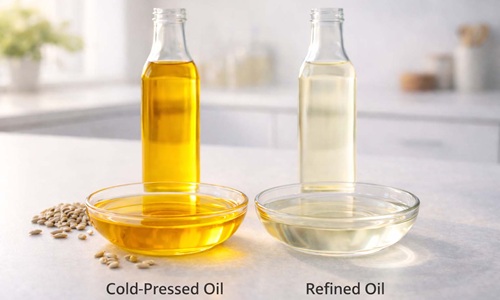
 Walk down any Indian grocery aisle today, and you’ll spot two very different bottles sitting side by side. One is crystal clear, completely odourless, and noticeably cheaper. The other looks slightly cloudy, actually smells like the seed it came from, groundnut, mustard, or sesame, and costs considerably more. Your mother probably used the cheaper, clearer one for decades without a second thought. Your health-conscious cousin now swears the pricier, cloudier one is the only oil worth cooking with.
This isn’t just a marketing gimmick playing out on your kitchen shelf. With India’s lifestyle diseases climbing steadily and edible oil consumption rising sharply over the past two decades, understanding what actually separates cold pressed oil from refined oil, beyond the price tag, genuinely matters for the food you’re putting on your family’s plate every single day.
What Actually Happens to Oil Before It Reaches Your Kitchen
Both cold pressed and refined oils start from the exact same place, oilseeds like groundnut, mustard, sesame, or sunflower. What happens to those seeds afterward is where the two paths diverge entirely.
Cold pressed oil is extracted using mechanical pressure at low temperatures, typically kept below 40 to 50 degrees Celsius, without any added heat or chemical solvents. Traditional methods like wood pressing, commonly called kachi ghani, or modern low-speed expellers, physically crush the seeds to release the oil while keeping the process gentle enough to preserve much of the seed’s original composition.
Refined oil takes a considerably more industrial route. It typically involves solvent extraction, often using hexane, to pull out maximum oil from the seeds, followed by stages of heating, bleaching, and deodorising at temperatures that can exceed 200 degrees Celsius. This process yields significantly more oil per kilogram of seeds, generally 30 to 40% more than mechanical cold pressing, which is exactly why refined oil costs less at the checkout counter.
The Nutrient Difference Is Genuinely Real, Not Just Marketing
This is where the science actually holds up reasonably well, rather than being pure commercial spin. The gentle, low-heat extraction used for cold pressed oil means natural compounds present in the original seed, vitamin E, polyphenols, and various antioxidants, largely survive the process intact.
Refining, by contrast, strips away much of this. The intense heat and chemical treatment involved in refining can significantly reduce vitamin E content and largely eliminate the natural antioxidants and plant compounds that were present in the raw oil. This doesn’t make refined oil inherently dangerous, it simply means you’re getting an oil that’s closer to pure fat calories, without many of the additional micronutrients the original seed carried.
Smoke Point: Where Refined Oil Actually Has an Edge
It’s worth being fair here, since refined oil genuinely does have a practical advantage in one specific area: smoke point, the temperature at which an oil starts to break down and produce smoke. Refining typically raises an oil’s smoke point considerably, which is exactly why refined oils are often marketed as better suited for high-heat cooking and deep frying.
That said, this doesn’t mean cold pressed oils are automatically unsuitable for Indian cooking methods. Cold pressed groundnut oil, for instance, has a smoke point around 230 degrees Celsius, comfortably high enough for most everyday Indian cooking, including shallow frying items like pakoras or pooris, without breaking down prematurely. The gap in practical smoke point between the two isn’t always as dramatic as marketing on either side suggests.
How to Genuinely Tell If Your Oil Is Actually Cold Pressed
Given how much of a premium cold pressed oil commands, it’s worth knowing how to verify you’re actually getting what you paid for, rather than a cleverly labelled refined product. Genuine cold pressed oil typically shows a few telltale signs: a golden or amber colour rather than being perfectly pale and transparent, a distinct natural aroma of the seed it came from, and sometimes a slight, harmless sediment settled at the bottom of the bottle.
If your bottle is completely colourless, entirely odourless, and perfectly clear with zero sediment, there’s a good chance you’re looking at a refined oil, regardless of what the front label claims. Checking these physical characteristics genuinely helps you avoid paying cold-pressed prices for what’s essentially a standard refined product with clever packaging.
What India’s Health Bodies Actually Emphasise
Rather than framing this purely as one oil being universally superior, it’s worth grounding this in what Indian nutrition guidance actually recommends. The Indian Council of Medical Research has consistently emphasised that fats are essential to the diet, but the emphasis is on appropriate quantity and quality, rather than any single oil type solving every dietary concern on its own.
This matters because no single cooking oil, cold pressed or refined, provides a perfect balance of every essential fatty acid your body needs. Many Indian nutritionists genuinely recommend rotating between two or three different oils rather than relying entirely on just one, using different oils for different cooking needs, say, one for regular tempering and another for occasional deep frying, rather than treating any single bottle as a complete nutritional solution.
Weighing the Genuine Trade-Offs for Your Household
Choosing between cold pressed and refined oil ultimately comes down to balancing a few honest trade-offs rather than picking a clear universal winner. Cold pressed oil offers better nutrient retention and a more natural composition, but costs more and has a comparatively shorter shelf life due to the absence of the preservative-like effect that heavy refining and deodorising provide.
Refined oil offers a longer shelf life, a higher smoke point suited to intensive frying, and a lower price point, but comes at the cost of many of the natural micronutrients present in the original seed. For many Indian households, a practical middle ground works well, using cold pressed oil for daily cooking and tempering where the flavour and nutrients genuinely matter, while reserving refined oil for occasional deep-frying tasks where its higher smoke point offers a genuine practical advantage.
Don’t Let Marketing Claims Replace Genuine Medical Advice
It’s worth being cautious about some of the more dramatic claims circulating around this topic, particularly assertions that refined oil directly causes conditions like diabetes or cancer. While refining does reduce beneficial nutrients, and some research has explored links between certain processed fats and health outcomes, the evidence connecting refined cooking oil specifically to serious diseases isn’t settled science in the way some marketing material suggests.
If you have specific health conditions, elevated cholesterol, heart disease risk, or diabetes, the choice of cooking oil is genuinely one factor among many, and it’s worth discussing your specific dietary needs with a doctor or registered dietitian rather than making significant changes based purely on oil marketing claims.
Frequently Asked Questions
Q1. Does cold pressed oil actually taste different in cooking, or is it just a marketing distinction?
Yes, the taste difference is genuinely noticeable, not just marketing. Cold pressed oils retain the natural flavour and aroma of the original seed, which is why cold pressed mustard or sesame oil tastes distinctly stronger and more authentic in traditional Indian dishes compared to the largely neutral taste of refined versions.
Q2. Is cold pressed oil safe for deep frying, or should I stick to refined oil for that specifically?
It depends on the specific oil. Cold pressed groundnut oil, for instance, has a sufficiently high smoke point for most Indian deep-frying needs, while some other cold pressed oils have lower smoke points better suited to lighter cooking methods. Checking the specific oil’s smoke point, rather than assuming all cold pressed oils behave the same way, is the safer approach.
Q3. Why does cold pressed oil have a shorter shelf life than refined oil?
Refining involves processes like deodorising and bleaching that effectively act as a form of preservation, extending shelf life considerably. Cold pressed oil retains more natural compounds, including some that can degrade faster once exposed to air, light, and heat, which is why it’s generally recommended to buy it in smaller quantities and use it up within a few months.
Q4. Can I use cold pressed and refined oil interchangeably in the same household, or should I pick just one?
Using both is a genuinely practical approach many Indian households already follow, cold pressed oil for daily cooking and tempering where flavour and nutrient retention matter most, and refined oil for occasional high-heat frying tasks where its higher smoke point offers a real advantage.