 By Subhash Kumar
 In Indian homes, fruits and vegetables are not optional items—they are part of almost every meal. We buy coriander for chutney, tomatoes for curry, spinach for palak paneer, cauliflower for sabzi, apples for children, grapes for snacks and leafy greens for “healthy eating.” But along with freshness, one worry keeps coming up in every household: are these fruits and vegetables carrying pesticides, dirt, germs or chemicals?
This concern has become even stronger now because many people order fruits and vegetables online. The produce reaches home in plastic bags, crates or delivery baskets, and we often do not know how it was handled before reaching our kitchen. Some items look shiny, some smell earthy, some have soil on them, and some leafy vegetables may hide tiny insects inside. Naturally, families want a safe and practical cleaning method.
The good news is that you do not need expensive sprays, harsh chemicals or complicated tricks. A smart washing routine can reduce dirt, surface pesticide residues and germs to a good extent. But it is also important to understand that washing cannot remove every type of pesticide completely, especially those absorbed inside the plant. So the goal is not “perfect chemical removal”; the goal is safer, cleaner and more careful daily eating.
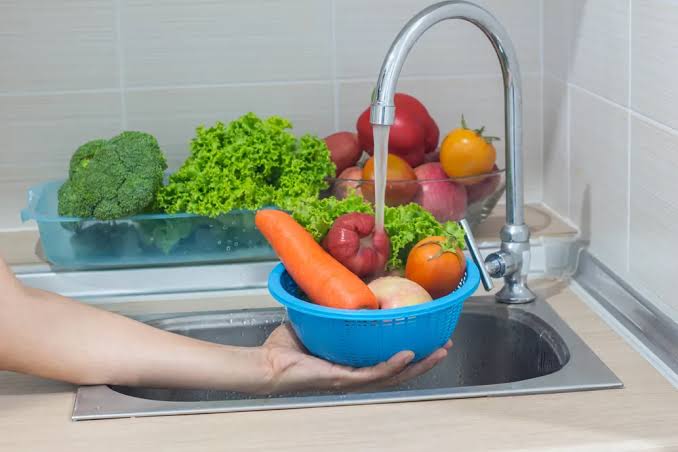
First Understand: Washing Helps, But It Is Not Magic
Many pesticide residues stay on the surface of fruits and vegetables. These can often be reduced by proper washing, rubbing, peeling, soaking, blanching or cooking. But some pesticides are systemic, which means they may be absorbed into the plant while growing. These cannot be fully removed by washing the outer surface.
This is why washing is important but not the only solution. Buying seasonal produce, choosing reliable sellers, avoiding damaged items, peeling where needed and eating a variety of foods also matters.
Do not panic and stop eating fruits and vegetables. The health benefits of eating fresh produce are much bigger than avoiding them out of fear. The right approach is to clean them properly and handle them hygienically.
Do Not Use Soap, Detergent or Dishwash Liquid
This is the most important safety rule. Never wash fruits and vegetables with soap, detergent, handwash, dishwash liquid, bleach or floor cleaner. Fruits and vegetables have pores, cuts and natural openings. Chemical cleaners can remain on the surface or enter small cracks.
Even if you rinse well, these residues may not fully go away and can upset the stomach or cause health risks. Remember, products made for utensils or floors are not made for food.
Commercial fruit and vegetable washes are also not necessary for daily use. Clean running water, gentle rubbing and correct handling are usually enough for home kitchens.
Step 1: Wash Your Hands and Clean the Sink Area
Before touching fresh produce, wash your hands with soap and water for at least 20 seconds. Many people clean vegetables but forget that dirty hands can transfer germs back to them.
Also clean the kitchen counter, chopping board, knife and basket. If the sink is dirty, do not directly place vegetables in it. Use a clean bowl or colander.
This step is especially important when you bring vegetables from the market or receive them through online delivery. The outer bags may have dust, soil or handling contamination.
Step 2: Sort the Produce Before Washing
Do not dump everything into one bucket. First sort the items.
Remove rotten leaves, spoiled tomatoes, bruised fruits, damaged potatoes or mouldy pieces. One spoiled item can affect the rest. Cut away small damaged portions if the produce is otherwise fresh, but discard items that smell bad or feel slimy.
Separate leafy vegetables, root vegetables, fruits, delicate berries and firm vegetables because each needs a different washing style.
Step 3: Wash Under Running Water
Hold fruits and vegetables under clean running water and rub them gently with your hands. Running water helps remove loose dirt and surface residues better than simply dipping once in a bowl.
For firm produce like apples, cucumbers, carrots, potatoes, bottle gourd, ridge gourd and capsicum, rub the surface properly. You can use a clean vegetable brush for potatoes, carrots and other hard-skinned produce.
Do not wash with very hot water. Normal clean water is enough. Hot water may damage texture and does not make pesticide removal perfect.
Step 4: Use Salt Water Soak for Some Produce
For many Indian homes, a salt water soak is a practical extra step. Take a large bowl of clean water and add a small amount of salt. Soak firm vegetables and fruits for 10–15 minutes, then rinse again under running water.
This can help loosen dirt and reduce some surface residues. It is useful for items like brinjal, okra, beans, cauliflower, cabbage leaves, grapes, apples and cucumbers.
Do not soak delicate fruits like strawberries or soft tomatoes for too long because they can become mushy. Also, do not think salt water makes produce completely chemical-free. It is only an additional cleaning step.
Step 5: Baking Soda Soak—Use Carefully
Some people use baking soda to clean fruits and vegetables. A mild baking soda soak may help reduce some pesticide residues from the surface, especially on firm produce.
You can add about one teaspoon baking soda to a large bowl of water, soak firm produce for 10–12 minutes, and then rinse very well under running water. This can be used for apples, grapes, cucumbers, carrots and similar items.
Do not use too much baking soda. Do not leave produce soaking for a very long time. And always rinse thoroughly, otherwise the taste and surface quality may be affected.
Step 6: Vinegar Is Not Always Needed
Vinegar is often suggested online for washing produce. It may help reduce some germs and surface residues, but it can change taste, smell and texture. Many Indian vegetables do not need vinegar washing.
If you use vinegar, keep it mild. Add a small amount to a large bowl of water, soak for a few minutes and rinse properly. Avoid using vinegar on delicate leafy greens and soft fruits if it affects taste.
For regular daily cleaning, running water plus rubbing is more practical than making every wash complicated.
How to Wash Leafy Vegetables Properly
Leafy vegetables need special care because soil, insects and pesticide residues can hide between leaves.
For spinach, methi, coriander, mint, amaranth, lettuce and other greens, first remove roots, yellow leaves and rotten parts. Fill a large bowl with clean water and dip the leaves. Swirl gently with your hands. Soil will settle at the bottom.
Lift the leaves out instead of pouring the dirty water over them. Repeat this process two or three times until the water looks clean. After that, rinse once under running water.
Do not soak leafy greens for too long because nutrients and freshness may reduce. Wash them close to cooking time if possible.
How to Wash Cauliflower, Cabbage and Broccoli
Cauliflower and broccoli can hide insects, worms and dirt inside the florets. First cut them into medium pieces. Soak them in salt water for 10–15 minutes. Then rinse properly under running water.
For cabbage, remove the outer leaves first. Cut the cabbage and rinse the layers properly. If you are eating cabbage raw in salad, wash it even more carefully.
For cooking, blanching cauliflower or broccoli for a short time can also help improve cleanliness and reduce some surface contamination.
How to Wash Fruits Like Apples, Grapes and Mangoes
For apples, pears, guava, chikoo and mangoes, wash under running water and rub the surface properly. Even if you plan to peel them, wash first. Otherwise, the knife can transfer dirt from the skin to the inside.
For grapes, remove them from the stem if needed, soak in clean water with a little salt or baking soda for a short time, then rinse well. Dry them before storing or eating.
For bananas, oranges and melons, wash the outside before cutting or peeling. This may sound unnecessary, but the knife or hands can transfer dirt from the peel to the edible part.
How to Clean Root Vegetables
Potatoes, carrots, radish, beetroot, sweet potato and ginger usually carry soil. Wash them under running water and scrub with a clean brush. If they are very muddy, soak for a few minutes first to loosen the soil.
Peeling can reduce surface residues, but do not peel unnecessarily if the skin is edible and clean, because many nutrients are near the skin. For potatoes and carrots from doubtful sources, peeling may be safer.
Special Tips for Online-Ordered Fruits and Vegetables
When produce comes from online delivery, do not directly place it in the refrigerator. First remove outer packaging and check each item.
Discard spoiled leaves, damaged fruits and leaking packets. Keep the delivery bags away from clean kitchen surfaces. Transfer produce to clean baskets or containers.
Do not wash everything immediately if you are storing it for several days. Excess moisture can make vegetables rot faster. Wash leafy greens if needed, dry them properly and store with paper towels. Wash berries and soft fruits only before eating.
For long storage, keep produce dry and refrigerated where required.
Should You Peel Fruits and Vegetables?
Peeling can reduce some pesticide residues from the surface, but it also removes fibre and nutrients. So use peeling wisely.
Peel when the skin is thick, waxy, damaged or difficult to clean. For example, bottle gourd, ridge gourd, pumpkin and some cucumbers are commonly peeled. Apples and carrots can be eaten with skin if washed well and sourced reliably.
For children, elderly people or people with weak immunity, peeling doubtful produce may be a safer choice.
Cooking Also Helps Reduce Some Residues
Washing is only one step. Cooking methods like boiling, blanching, steaming and peeling can reduce some residues further. For example, leafy greens, cauliflower and beans become safer when washed well and cooked properly.
However, do not overcook everything in the name of safety. Overcooking can reduce taste and nutrients. The idea is balanced cleaning and sensible cooking.
Common Mistakes Indian Homes Should Avoid
Do not wash vegetables with detergent. Do not soak everything overnight. Do not store wet vegetables in closed plastic bags. Do not cut vegetables before washing. Do not use the same chopping board for raw meat and salad vegetables. Do not ignore spoiled or slimy produce.
Another common mistake is washing only after cutting. This can spread dirt and residues onto the cut surface. Always wash first, then cut.
Also avoid using dirty kitchen towels to dry washed produce. Use a clean cloth, paper towel or colander.
Best Daily Washing Routine
For daily Indian cooking, keep it simple. Wash hands, sort produce, rinse under running water, rub or brush firm items, soak leafy or tightly packed vegetables when needed, rinse again, dry properly and then cut.
For fruits eaten raw, give extra attention because there is no cooking step later. For vegetables that will be cooked, proper washing plus cooking is usually enough.
The most practical habit is consistency. A simple routine followed daily is better than a complicated method followed only once in a while.
FAQs
Q1. Can pesticides be completely removed from fruits and vegetables?
No, washing cannot remove all pesticides completely. It can reduce many surface residues, dirt and germs. Some pesticides may be inside the plant and cannot be fully removed at home. Proper washing, peeling and cooking can reduce risk.
Q2. Is baking soda better than plain water for washing produce?
Baking soda may help reduce some surface residues on firm produce, but plain running water with rubbing is still the most important step. If using baking soda, use a mild solution and rinse very well.
Q3. Should I wash vegetables before storing them in the fridge?
Not always. Washing before storage can add moisture and make vegetables spoil faster. For many items, it is better to wash just before use. If you wash leafy greens before storing, dry them properly first.
Q4. Is organic produce pesticide-free?
Organic produce may reduce exposure to many synthetic pesticides, but it still needs washing. It can carry soil, germs, insects and natural residues. Always wash organic fruits and vegetables before eating or cooking.