 By Subhash Kumar
 Walk into any Indian grocery store or scroll through a dairy delivery app today, and you’ll spot it everywhere: A2 milk, priced noticeably higher than regular milk, promising better digestion, less bloating, and a “purer” desi cow heritage. Your mother might swear by Gir cow milk being gentler on the stomach, while your doctor might simply shrug and say milk is milk. So which is it? With A2 milk now a genuine premium category across Indian dairy brands, understanding what actually separates it from regular milk, and what the science genuinely says versus what marketing claims, matters more than ever before you pay double for your daily glass.
This isn’t just a curiosity for health enthusiasts either. Millions of Indians deal with vague digestive discomfort after drinking milk, bloating, mild cramping, a general sense of heaviness, often assuming it’s lactose intolerance without ever actually getting tested. If the real culprit is something else entirely, a specific milk protein rather than lactose, that changes what solution actually makes sense for your body.
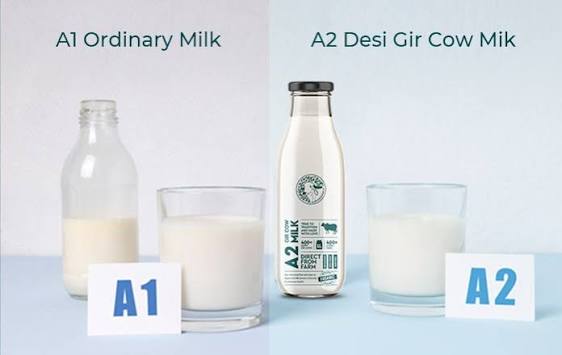
What A1 and A2 Milk Actually Are
Both A1 and A2 milk come from cows, and both contain the same basic nutrients, protein, calcium, fat, and lactose. The difference lies specifically in one protein: beta-casein, which makes up a significant portion of milk’s total protein content. Beta-casein exists in multiple genetic variants, and the two most talked about are A1 and A2.
The distinction between them comes down to a single amino acid at one specific position in the protein chain. A1 beta-casein contains histidine at this position, while A2 beta-casein contains proline instead. This might sound like an insignificant molecular detail, but it genuinely changes how your body processes the protein once it hits your digestive system.
Why That One Amino Acid Actually Matters
When your body digests A1 beta-casein, that histidine at position 67 allows digestive enzymes to snip off a small peptide fragment called BCM-7, short for beta-casomorphin-7. A2 beta-casein, with its proline substitution at the same spot, resists this same enzymatic cut, meaning BCM-7 largely doesn’t form when you digest A2 milk.
This matters because BCM-7 is an opioid-like peptide that can bind to receptors in your gut and central nervous system. Researchers have studied whether this peptide contributes to digestive discomfort, inflammation, and slower gut transit time, and some animal studies have shown these effects. In humans, the picture is genuinely still developing, but it’s exactly this mechanism that underpins most of the A2 milk marketing you’ve probably seen.
Which Cows Actually Produce Which Type
Here’s where India’s own dairy heritage genuinely enters the picture. Indian native breeds, commonly called Desi cows, including the Gir, Sahiwal, and Red Sindhi, naturally produce milk that’s predominantly or entirely A2 in composition. This isn’t a modern innovation, it’s simply how these breeds have genetically been for generations.
In contrast, several widely farmed international breeds, particularly Holstein-Friesian cows commonly used in large-scale commercial dairy operations worldwide, tend to produce milk containing a mix of both A1 and A2 beta-casein. This is exactly why “regular” milk in many markets, including a lot of commercially available Indian milk from crossbred or Holstein-influenced herds, contains both protein types rather than being purely one or the other.
What the Research Genuinely Shows So Far
This is the part worth being careful and honest about, since a lot of A2 milk marketing tends to present preliminary findings as settled science. A number of smaller human studies have found genuinely promising results. A randomized, double-blind study in China found children experienced fewer gastrointestinal symptoms after switching to A2 milk for just five days, alongside some reported cognitive benefits. Another study found reduced markers of intestinal inflammation among A2 milk drinkers compared to those consuming standard A1/A2 milk.
More recent gut microbiota research has also found measurable shifts in gut bacterial composition specifically after A2 milk consumption, something that wasn’t seen with regular milk in the same study. That said, the overall body of human research remains genuinely limited in scale, and several major scientific and food safety bodies internationally have stated that current evidence isn’t yet strong enough to draw firm, universal conclusions about A1 milk causing harm in the general population. If you see a claim stated with complete certainty either way, that’s worth treating with a healthy dose of skepticism rather than accepting outright.
Is A2 Milk the Same as Lactose-Free Milk
This is a genuinely common point of confusion, and it’s worth clearing up directly. A2 milk is not lactose-free. It contains exactly the same amount of lactose as regular milk, since lactose and beta-casein are entirely separate components of milk.
What seems to happen for some people is that their digestive discomfort was never actually caused by lactose intolerance in the first place, it was a reaction to the BCM-7 peptide released from A1 beta-casein instead. This is exactly why some individuals who believed themselves lactose intolerant report feeling noticeably better on A2 milk, without their body actually processing lactose any differently than before. If you have genuine, diagnosed lactose intolerance, switching to A2 milk alone likely won’t resolve your symptoms, since the lactose content remains unchanged.
Does A2 Milk Genuinely Support Heart and Brain Health
You’ll frequently see claims linking A2 milk to improved heart health and cognitive benefits, often tied specifically to Gir cow milk’s additional nutrient profile, omega-3 fatty acids, conjugated linoleic acid, and certain other compounds. Some early research has explored connections between BCM-7 and cardiovascular markers, with the theory being that avoiding this peptide might reduce certain inflammatory pathways linked to heart disease risk.
It’s worth being genuinely measured here though. These specific claims largely stem from early-stage or observational research rather than the kind of large, long-term clinical trials that would definitively establish A2 milk as meaningfully better for heart or brain health compared to regular milk. Ongoing clinical research, including newer trials specifically comparing A2 milk against regular milk and plant-based alternatives for bone, cardiometabolic, and immune health, should provide considerably clearer answers over the coming years.
Should You Actually Switch to A2 Milk
If you or a family member regularly experience bloating, mild cramping, or digestive discomfort after drinking regular milk, but you’ve ruled out or aren’t sure about genuine lactose intolerance, trying A2 milk for a few weeks is a genuinely reasonable, low-risk experiment. Pay attention to whether your symptoms actually improve, rather than assuming they will simply because of what the packaging promises.
If you don’t currently experience any digestive issues with regular milk, there’s no strong evidence suggesting you need to switch purely for general health optimization. The price premium for A2 milk in Indian markets is often significant, and given that the research, while promising in some areas, isn’t yet conclusive enough to declare A2 milk universally superior, it’s a personal choice based on your own digestive experience rather than a medical necessity for everyone.
Frequently Asked Questions
Q1. If I have lactose intolerance, will switching to A2 milk solve my digestive symptoms?
Not necessarily. A2 milk contains the same amount of lactose as regular milk, so if your discomfort is genuinely caused by lactose intolerance rather than a reaction to A1 beta-casein, switching alone likely won’t resolve your symptoms. A lactose intolerance test can help clarify which issue you’re actually dealing with.
Q2. Is Gir cow milk always guaranteed to be pure A2, or can this vary?
Indian Desi breeds like Gir genetically tend to produce predominantly or entirely A2 milk, but actual purity can still depend on herd management and whether any crossbreeding has occurred. If A2 purity matters to you specifically, checking whether the brand provides genetic testing or certification for their herd is worth doing rather than assuming based on breed name alone.
Q3. Is A2 milk safe for children, and does it offer any special benefit for them specifically?
A2 milk is considered safe for children in the same way regular milk is, and some smaller studies have specifically noted reduced gastrointestinal symptoms in children who switched to it. That said, if your child has no digestive issues with regular milk, there’s no established requirement to switch purely based on current evidence.
Q4. Why is A2 milk priced so much higher than regular milk in India?
The premium largely reflects the cost of maintaining pure Desi cow herds, which tend to produce less milk volume per animal compared to high-yield crossbred or Holstein cattle, along with the additional testing and certification some brands use to verify A2 purity, rather than any additional processing cost.