 By Subhash Kumar
 Monday morning, and you’re staring at a wardrobe full of blazers and formal shirts that feel exactly like everyone else’s. Meanwhile, that beautiful Mangalagiri cotton saree your mother handed down, or the Chanderi kurta set gathering dust since last Diwali, sits untouched because you’ve somehow convinced yourself handlooms belong only to weddings and festivals. Here’s the thing though: some of India’s most accomplished working women, from senior lawyers to startup founders, have quietly figured out that a well-styled handloom outfit is one of the most professional, most distinctive things you can wear to work.
The shift is real and it’s happening across corporate India right now. Handloom cotton, linen, and lightweight silk are being recognised not as festive indulgence but as genuinely smart office wear, breathable through a long commute, polished enough for a client meeting, and impossible to mistake for anyone else’s Zara blazer. If you’ve been holding back on wearing your handlooms to work, here are seven genuinely practical ways to bring them into your everyday office rotation.
1. Pair a Cotton Handloom Saree With a Structured Blouse
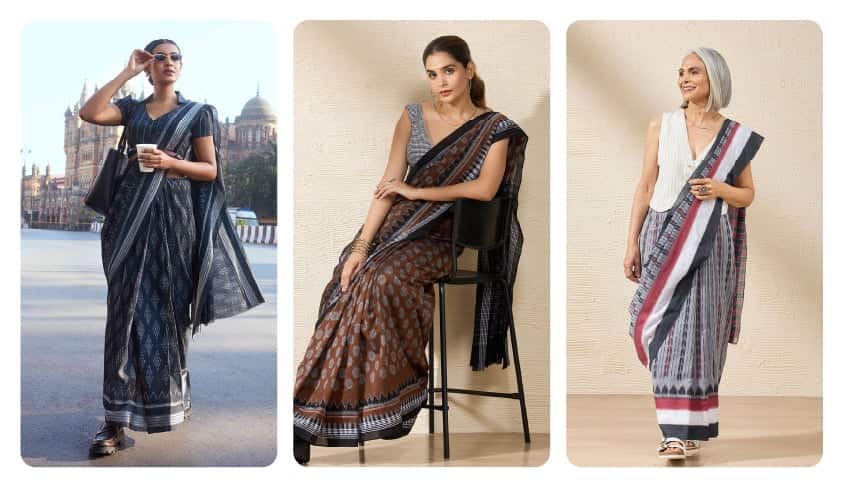
The single most effective shift in office saree styling right now is the blouse choice. A plain, well-woven cotton handloom saree, Mangalagiri, Chettinad, or Sambalpur are excellent starting points, instantly reads as more professional when paired with a structured, full-sleeve blouse rather than the traditional short-sleeve blouse cut.
Stick to earthy, muted tones for your everyday rotation, sage green, dusty rose, charcoal, or off-white, since these read as competent and composed rather than festive. Save the brighter block prints for days you specifically want to stand out in a client presentation, and let the fabric’s natural texture do the talking rather than reaching for heavy embroidery.
2. Build a Chanderi Kurta and Cigarette Pant Combination
If sarees genuinely aren’t practical for your daily commute, a Chanderi kurta paired with straight-cut cigarette trousers has become the defining formula for corporate ethnic wear this year. The key detail here is avoiding palazzo pants specifically, since they read too casual for most professional settings, whereas a straight or slightly tapered trouser gives the whole look a sharper, more office-appropriate silhouette.
Chanderi’s light sheen and crisp drape make it forgiving through long meetings without wrinkling the way ordinary cotton sometimes does, and a solid or subtly block-printed Chanderi kurta genuinely photographs well in both natural office lighting and evening events if you’re heading straight from work to something else.
3. Layer a Blazer Over a Simple Handloom Kurta
This is genuinely the smartest trick for anyone who wants their handloom pieces to feel instantly more corporate without buying anything new. A well-cut blazer, navy, black, or charcoal, thrown over a plain cotton or khadi kurta transforms an otherwise casual piece into something entirely boardroom-ready.
The contrast works because the blazer’s structure balances out the kurta’s softer, more fluid drape, giving you the best of both worlds, the breathability and cultural rootedness of handloom fabric, alongside the polish and authority that a tailored blazer naturally carries in professional settings.
4. Choose a Handloom Co-Ord Set for Effortless Coordination
Handloom co-ord sets, a matching top and bottom cut from the same fabric and print, have quietly become the go-to office solution for women who want a put-together look without spending time coordinating pieces every morning. A Narayanpet or Chettinad handloom co-ord set, for instance, delivers instant, effortless coordination that works perfectly for a morning meeting and transitions easily into an evening event without a full outfit change.
The advantage here goes beyond convenience. Because the pieces are cut from genuine handloom fabric rather than printed synthetic blends, they hold their shape and colour considerably better across repeated wears and washes, which genuinely matters if you’re planning to build this into a regular office rotation rather than a one-time purchase.
5. Try the Pre-Stitched Saree for Time-Pressed Mornings
If draping a traditional saree every morning feels like an impossible ask on a workday, the pre-stitched saree has genuinely gone from a controversial shortcut to a mainstream, widely accepted option this year. It’s essentially a saree draped and fixed onto a base skirt, giving you the full visual grandeur of a traditional drape with none of the morning draping anxiety.
For office wear specifically, opt for a pre-stitched handloom cotton or linen version in a muted, solid tone rather than a heavily embellished silk one, since the goal here is professional polish rather than festive drama. This is exactly the kind of piece that lets you wear a saree confidently even on your busiest workdays, without needing an extra fifteen minutes and a helping hand before you walk out the door.
6. Use Oxidised Jewellery to Keep the Look Office-Appropriate
The accessory rule that matters most for handloom office wear this year is refreshingly simple: pick one statement piece and keep everything else minimal. Oxidised silver jewellery, in particular, has overtaken heavier gold sets for everyday and semi-formal wear, largely because its raw, handcrafted feel pairs naturally with the texture of handloom cotton and linen.
A single pair of oxidised jhumkas with a simple pendant, or one layered oxidised necklace with small studs, completes a handloom outfit without tipping it into festive territory. Save the full matching jewellery sets, necklace, earrings, bangles, and everything in between, for actual celebrations, and let your handloom fabric’s own texture and weave be the primary visual interest at work.
7. Build a Rotating Handloom Wardrobe Instead of One-Off Pieces
Rather than buying a single striking handloom piece for one specific occasion, the smarter long-term approach is building a small, genuinely versatile collection you rotate through the work week. Start with one breathable cotton saree or kurta set for daily ease, add a slightly more structured Chanderi piece for meeting-heavy days, and build gradually from there rather than trying to assemble an entire handloom wardrobe in one shopping trip.
This approach pays off in ways that go beyond just looking put together. Genuine handloom fabric, properly cared for, holds its shape and colour across hundreds of washes far better than synthetic blends that fade or lose structure within a season, which means your cost-per-wear actually works out considerably lower over time than it initially appears.
Frequently Asked Questions
Q1. Is a handloom saree too casual to wear for an important client meeting or presentation?
Not at all, provided you pair it thoughtfully. A plain handloom cotton or silk saree in a muted tone, paired with a structured, full-sleeve blouse and minimal jewellery, reads as considerably more polished and memorable than a generic formal shirt, and it’s genuinely become common among senior professionals across corporate India.
Q2. How do I keep a cotton handloom saree from looking wrinkled by the afternoon?
Choosing tighter-woven varieties like Chanderi or mercerized cotton over looser weaves helps considerably, since these hold their crispness longer through a full workday. Hanging the saree properly overnight rather than folding it right before wearing also reduces creasing significantly.
Q3. Can I wear the same handloom kurta for both office and an evening event without changing?
Yes, this is exactly the versatility handloom co-ord sets and structured kurtas are designed for. Simply swapping your daytime blazer or minimal jewellery for a statement earring or a light dupatta in the evening is usually enough to shift the entire look from office-appropriate to evening-ready.
Q4. Are handloom fabrics genuinely more expensive than regular office wear, or is that just a perception?
The upfront cost can be somewhat higher, but genuine handloom pieces typically last far longer without losing shape or colour compared to synthetic blends, which means the actual cost-per-wear often works out lower once you factor in how many more times you can realistically wear the same piece before it starts looking worn out.