 By Saurav Mehra
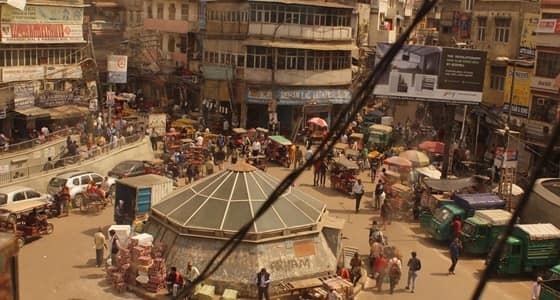
 The name says everything. Labour Chowk is not a branded commercial intersection with a developer’s name or a politician’s legacy attached to it — it is simply the place where daily wage workers gather before dawn, standing in loose groups along the roadside with their tools, waiting to be hired for the day. This scene plays out at multiple Labour Chowks across Delhi, but the most well-known ones are in the working-class residential belts of West and North Delhi where construction workers, plumbers, electricians, painters, and general labourers have been presenting themselves for daily hire in this manner for decades.
There is something quietly remarkable about the institution of Labour Chowk that urban planners and economists rarely discuss. It is an entirely self-organised, informal labour market that functions with remarkable efficiency — contractors know to come here, workers know to wait here, and the daily wage economy of Delhi’s construction sector depends on this informal exchange in ways that no digital platform has yet successfully replicated. The chowk is busiest between 6 AM and 9 AM, after which the morning’s hiring is largely complete and the character of the junction shifts toward whatever neighbourhood commercial activity gives it its secondary identity.
| Detail | Information |
| Location | Labour Chowk, multiple locations across Delhi — most prominent in West and North Delhi |
| Type of Junction | Informal Labour Market / Neighbourhood Transit Hub |
| Primary Reference Points | Najafgarh Road, Rohtak Road, GT Karnal Road corridors |
| Nearest Metro Stations | Varies by location — Green, Red, and Blue Line stations serve the primary Labour Chowks |
| Key Roads Connected | Najafgarh Road, Rohtak Road, Outer Ring Road, GT Karnal Road |
| Distance from Connaught Place | Approx. 12–20 km depending on location |
| Primary Hours of Activity | 5:30 AM – 9:00 AM (hiring hours); commercial activity continues through day |
| Workers Present | Construction workers, plumbers, electricians, painters, general labourers |
| Governing Authority | Various — North, South, East Delhi Municipal Corporations |
| Nearby Landmarks | Residential colonies, local markets, bus terminals |
| Public Transport Options | Delhi Metro, DTC Bus, Shared Auto, App Cabs |
| Best Suited For | Daily wage labour hiring and neighbourhood residential corridor transit |
Location
Labour Chowk as a concept exists at multiple points across Delhi, but the term most commonly refers to the chowks in the western Delhi corridor — particularly along Najafgarh Road in Dwarka-Uttam Nagar belt, along Rohtak Road in the Nangloi-Mundka corridor, and along outer North Delhi’s GT Karnal Road zone. Each of these has developed organically as a labour aggregation point because of the proximity to major construction activity zones and the convenient highway access that allows contractors to arrive, hire, and depart efficiently before the morning traffic builds.
The Najafgarh Road Labour Chowk near Dwarka is perhaps the most referenced — sitting along a road that carries significant construction-related vehicle traffic given the ongoing residential development in the Dwarka and New Gurugram sectors. Workers from Rajasthan, UP, Bihar, and Jharkhand who live in the nearby working-class colonies know exactly where to stand, what time to arrive, and what rates to expect. This knowledge is passed down within worker communities through informal social networks that function with a reliability no app has matched.
Directions
From Connaught Place to Najafgarh Road Labour Chowk: Travel westward via NH-48 toward Dwarka and exit toward Najafgarh Road heading southward. The primary Labour Chowk on this corridor is approximately 18 to 20 kilometres from Connaught Place, reached in 35 to 55 minutes.
From Dwarka Sectors: Travel southward from the central Dwarka sectors toward Najafgarh Road. The Labour Chowk gathering points are accessible within 5 to 8 kilometres of the Dwarka residential belt’s southern edge.
From Nangloi (Rohtak Road Labour Chowk): The Rohtak Road corridor Labour Chowk near Nangloi is directly accessible from Nangloi Metro Station on the Blue Line, approximately 1 to 2 kilometres from the station exit.
From Outer North Delhi (GT Karnal Road corridor): The northern Labour Chowks along GT Karnal Road are accessible from Azadpur via the northern highway, approximately 8 to 12 kilometres from Connaught Place toward the outer northwestern zone.
Metro and Public Transport Connectivity
Labour Chowks are invariably positioned near metro stations and bus terminals by the organic logic of worker convenience — the workers who arrive from distant residential zones need affordable public transport to reach the hiring point early enough for the morning rush. The Blue Line serves the western Delhi Labour Chowks via Dwarka and Nangloi stations. The Green Line serves the northwestern zone via Mundka. The Red Line covers the northern corridor. DTC buses serve all these corridors, and the very early morning DTC services — running before 6 AM — are used extensively by daily wage workers making their way to the chowk before the contractors arrive.
Nearby Areas
Dwarka Residential Belt: The enormous construction activity associated with Dwarka’s ongoing residential and commercial development has sustained the Najafgarh Road Labour Chowk for years, with new project sites regularly drawing from the worker pool that gathers at this junction each morning.
Nangloi Industrial and Residential Zone: The mixed industrial-residential character of Nangloi creates sustained demand for plumbing, electrical, and construction labour throughout the year, supporting the Rohtak Road Labour Chowk’s daily activity.
Bawana Industrial Area: Delhi’s outer industrial estate generates demand for specialised technical workers whose hiring sometimes occurs at the northern Labour Chowks accessible via GT Karnal Road.
Working Class Residential Colonies: The dense migrant worker colonies of outer West and North Delhi — housing workers from UP, Bihar, and Rajasthan — are the residential catchment from which the Labour Chowk’s daily workforce emerges each morning, often having walked or cycled to the hiring point from colonies a kilometre or two away.
Frequently Asked Questions (FAQs)
Q1. Where is Labour Chowk in Delhi?
Multiple locations — primarily along Najafgarh Road near Dwarka, Rohtak Road near Nangloi, and the GT Karnal Road corridor in outer North Delhi.
Q2. What time is Labour Chowk most active?
Between 5:30 AM and 9:00 AM when daily wage workers gather for morning hiring by contractors and builders.
Q3. What type of workers gather at Labour Chowk Delhi?
Construction workers, plumbers, electricians, painters, carpenters, and general daily wage labourers seeking day-based employment.
Q4. Which metro serves Labour Chowk Delhi?
Depends on the specific location — Blue Line for the western corridor, Green Line for northwestern, Red Line for the northern corridor.
Q5. Is Labour Chowk only for construction workers?
Primarily yes, but domestic workers, gardeners, and general helpers also sometimes use these gathering points for informal daily hiring.