 By Saurav Mehra
 A car may have a powerful engine, strong brakes, six airbags and a premium safety rating, but all of it depends on four small contact patches touching the road—your tyres. In Indian driving conditions, tyres work very hard every day. They handle potholes, speed breakers, hot highways, sharp stones, monsoon water, broken roads, dust, sudden braking, overloaded trips and long parking hours under the sun. Yet, many car owners check engine oil, fuel level and car wash more often than tyre health.
This is risky because tyres do not fail suddenly without warning in most cases. They usually give signs first—uneven wear, cracks, low tread, sidewall cuts, vibration, noise, pulling to one side or frequent air loss. If these signs are ignored, the tyre may lose grip, skid in rain, increase braking distance, reduce mileage or even burst at high speed.
Checking tyre health is not only for mechanics. Every car owner can learn the basics in a few minutes. Whether you drive a hatchback in city traffic, a sedan on highways, an SUV on rough roads or a CNG car with daily running, tyre inspection should become a regular habit. It saves money, improves safety and keeps your car more stable.
Why Tyre Health Matters So Much
Tyres are the only part of the car that directly touches the road. Brakes stop the wheels, but tyres provide the grip. Steering turns the wheels, but tyres decide how well the car follows the direction. ABS, traction control and stability control also depend on tyre grip.
A worn or damaged tyre can reduce braking performance, especially on wet roads. It can also make the car unstable during sudden lane changes, emergency braking or cornering. In monsoon, bald tyres can lose grip quickly because they cannot push water away properly.
Good tyres improve safety, comfort, fuel efficiency and confidence. Poor tyres silently increase risk.
Check Tread Depth First
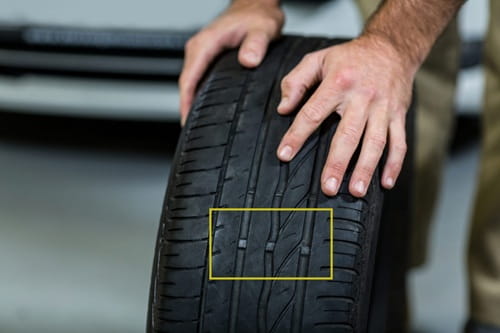
Tread is the grooved rubber pattern on the tyre surface. It helps grip the road and channel water away. As the tyre wears, tread depth reduces.
Most car tyres have tread-wear indicators inside the grooves. These are small raised bars across the tread channels. When the tyre surface becomes level with these bars, the tyre has reached its minimum safe tread limit and should be replaced.
You can also use a tread-depth gauge for a more accurate check. Many tyre shops can measure it within seconds. If the tread is too low, do not delay replacement, especially before monsoon or highway travel.
Understand the 1.6 mm Rule
For cars, 1.6 mm is commonly treated as the minimum tread-depth limit. But waiting until the tyre reaches this point is not always wise for Indian roads.
In rain, worn tyres lose water-dispersing ability. Braking distance increases and the car may skid more easily. If you drive often on highways, wet roads or hilly routes, consider replacing tyres before they reach the absolute minimum.
A tyre may still look “usable” from far away, but if tread depth is low, safety is already compromised.
Look for Uneven Wear Patterns
Tyres should ideally wear evenly across the tread. If one area is wearing faster than another, the car may have an alignment, balancing, suspension or tyre-pressure issue.
Uneven wear is not only a tyre problem. It is a message from the car. If you read it early, you can fix the cause and save the next set of tyres too.
Inspect all four tyres from outer edge to inner edge. Turn the steering fully left and right to see the front tyre inner edges clearly. Many owners only look at the outer side and miss serious inner wear.
Centre Wear: Usually Over-Inflation
If the middle part of the tyre tread is wearing faster than both edges, the tyre may be over-inflated. When air pressure is too high, the centre area bulges slightly and takes more load.
Over-inflation reduces comfort and grip. The ride may feel harsh, and the car may bounce more over bad roads. It can also increase centre tread wear and reduce tyre life.
Always maintain the tyre pressure recommended by the car manufacturer, not the maximum pressure written on the tyre sidewall.
Edge Wear: Usually Under-Inflation
If both outer edges of the tyre are worn more than the centre, the tyre may be under-inflated. Low pressure makes the tyre side areas carry more load.
Under-inflation is very common in India because many people check tyre pressure only before long trips. Low pressure increases fuel consumption, heats the tyre more and can lead to tyre failure at high speed.
Check pressure at least every two weeks and before highway drives. Use the recommended pressure for normal load and full load as mentioned in your car manual or door-side sticker.
One-Side Wear: Alignment Issue
If only the inner or outer edge of a tyre is wearing quickly, wheel alignment may be wrong. This can happen after hitting potholes, road dividers, stones or deep speed breakers.
One-side wear is dangerous because the tyre may look fine from one angle while the hidden side is badly worn. Many front tyres wear on the inner edge without the owner noticing.
If your car pulls to one side, steering is not centred, or tyre edges look uneven, get wheel alignment checked immediately.
Patchy or Cupping Wear: Suspension or Balancing Problem
If the tyre has uneven patches, waves, dips or a saw-tooth feel, it may indicate wheel balancing, suspension, shock absorber or bearing issues.
This type of wear can create road noise, vibration and poor grip. You may feel the steering shaking at certain speeds.
Do not simply replace the tyre without checking the cause. If suspension or balancing is faulty, the new tyre may also wear badly.
Feathering Wear: Toe Alignment Problem
Feathering means tread blocks feel smooth in one direction and sharp in the opposite direction when you run your hand gently across the tyre. This often happens due to incorrect toe alignment.
It may not be visible immediately, but it can create noise and reduce tyre life. If your tyres make a humming sound or feel rough when touched, ask a tyre professional to check alignment.
Be careful while touching tyres. Do not run your hand aggressively over damaged tread because sharp objects may be stuck.
Check Sidewalls Carefully
The sidewall is the side portion of the tyre. It absorbs flexing, load and road impact. Sidewall damage is serious because it cannot usually be repaired safely like a simple tread puncture.
Look for cuts, cracks, bulges, bubbles, exposed cords or deep scratches. A sidewall bulge means internal tyre damage. It can happen after hitting a pothole hard or driving with low pressure.
Never ignore a bulge. The tyre may burst without much warning, especially at highway speed. Replace it as soon as possible.
Watch for Cracks Due to Age and Heat
Indian heat can dry out rubber over time. If your car is parked outdoors daily, tyres may develop small cracks even if tread depth looks okay.
Check for cracks on sidewalls and between tread grooves. Minor surface ageing may happen, but deep cracks are unsafe. Old tyres can harden and lose grip even if they have enough tread.
This is common in low-running cars. A car driven only 3,000 km a year may still need tyre replacement because of age, heat and rubber hardening.
Check Tyre Age
Tyres have a manufacturing date printed on the sidewall as a DOT-style code. The last four digits usually show the week and year of manufacture. For example, 2424 means the tyre was made in the 24th week of 2024.
Even if tread is good, very old tyres should be inspected carefully. Rubber ages with time, heat and sunlight. Cars that are parked for long periods may develop flat spots or cracks.
There is no single perfect replacement age for every tyre because usage and storage matter, but older tyres need more frequent inspection.
Check Tyre Pressure Correctly
Tyre pressure should be checked when tyres are cold, preferably in the morning or after the car has been parked for a few hours. Pressure increases when tyres heat up during driving, so checking immediately after a long drive may give a higher reading.
Use the pressure recommended by your car manufacturer. You can usually find it on the driver-side door frame, fuel lid or owner’s manual.
Do not use the same pressure for every car. A hatchback, sedan, SUV and fully loaded vehicle may need different pressures.
Do Not Forget the Spare Tyre
Many people check four tyres and forget the spare. Then during a puncture, they discover the spare tyre has no air or is cracked.
Check spare tyre pressure once a month. If your car has a space-saver spare wheel, understand its speed and distance limits. Do not drive normally for long distances on a temporary spare.
Also check whether the jack, wheel spanner and lock-nut key are present in the car.
Look for Nails, Stones and Cuts
Inspect the tyre surface for nails, screws, glass pieces, stones and metal bits. Indian roads often have construction debris and sharp objects.
Small stones stuck in grooves can be removed carefully. But if a nail or screw is embedded, do not pull it out immediately on the road. It may be plugging the leak temporarily. Visit a tyre shop and get it repaired properly.
If the tyre loses air again and again, there may be a slow puncture, valve issue or rim leak.
Feel for Vibration While Driving
Tyre problems are not always visible. Sometimes the first sign is vibration. If the steering shakes at certain speeds, wheel balancing may be required. If the whole car vibrates, there may be tyre, wheel, suspension or alignment issues.
Do not ignore vibration, especially on highways. It can reduce control and make long drives tiring.
Get balancing checked after tyre replacement, puncture repair, wheel impact or if vibration appears suddenly.
Notice Pulling to One Side
If your car drifts left or right when you lightly hold the steering on a straight road, alignment may be wrong. Tyre pressure difference can also cause pulling.
First check pressure in all tyres. If pressure is correct and pulling continues, get alignment and suspension checked.
Driving with poor alignment wastes tyres quickly and affects fuel efficiency.
Rotate Tyres Regularly
Tyre rotation means changing tyre positions so they wear more evenly. Front tyres usually wear faster in front-wheel-drive cars because they handle steering, braking and power delivery.
Follow the rotation interval recommended by your car manufacturer. Many owners rotate tyres around every 8,000–10,000 km, but the exact schedule can vary.
Proper rotation increases tyre life and keeps handling balanced. Always check whether your tyres are directional or staggered before rotation because some tyres cannot be rotated in a simple pattern.
Balance and Align After Rough Impacts
Indian roads are unpredictable. If you hit a deep pothole, broken road edge or divider hard, get the wheels checked. Even if the tyre does not burst, alignment may shift or the rim may bend slightly.
After such impacts, watch for steering vibration, pulling, uneven tyre noise or air loss. Early inspection can prevent bigger problems.
Check Before Long Trips
Before a highway trip, inspect tread, pressure, sidewalls, spare tyre and puncture kit. Tyres heat up at high speed, and weak tyres are more likely to fail during long runs.
Do not start a long journey with low tread, sidewall cuts or frequent air leakage. Also avoid overloading the car because extra weight increases tyre stress.
A five-minute tyre check before a trip can prevent hours of trouble later.
When Should You Replace Tyres?
Replace tyres if tread has reached the wear indicator, sidewall has bulges or deep cuts, cracks are serious, tyre age is high with visible hardening, punctures are repeated, or uneven wear has made the tyre unsafe.
Also replace tyres in pairs when possible, especially on the same axle. Mixing very old and new tyres can affect grip balance.
Use the correct tyre size and speed rating recommended for your car. Do not fit random oversized or undersized tyres only for looks.
Practical Monthly Tyre Health Routine
Once a month, check tyre pressure, tread depth, sidewalls, nails, cracks, bulges and spare tyre. Every few months, get alignment and balancing checked if needed. Rotate tyres as per schedule. Before monsoon and highway trips, inspect more carefully.
Tyre care is not expensive, but tyre neglect can be very costly.
FAQs
Q1. How often should I check my car tyres?
Check tyre pressure every two weeks and inspect tyre condition at least once a month. Also check tyres before long highway trips, monsoon travel or after hitting a deep pothole.
Q2. What is the minimum safe tyre tread depth?
For car tyres, 1.6 mm is commonly treated as the minimum tread-depth limit. However, for wet roads and highway safety, it is better not to wait until tyres become fully worn.
Q3. Why are my tyres wearing only on one side?
One-side wear usually indicates wheel alignment problems, suspension issues or repeated rough-road impact. Get alignment and suspension checked before the tyre becomes unsafe.
Q4. Is a sidewall bulge dangerous?
Yes, a sidewall bulge is dangerous because it indicates internal tyre damage. The tyre can burst, especially at high speed. Replace the tyre as soon as possible.