 By Saurav Mehra
 A motorcycle can accelerate quickly, look stylish and give excellent mileage, but when a dog suddenly crosses the road, a car stops without warning, or rain makes the road slippery, only one thing matters—how confidently your bike can stop. In Indian traffic, braking is not a rare event. It happens every few seconds near signals, speed breakers, potholes, school zones, markets, flyovers and highways. That is why brake pads are not a small maintenance item; they are directly linked to rider safety.
Many riders replace engine oil on time, clean the chain and check tyre pressure, but brake pads are often ignored until they make noise. Some riders wait for a harsh grinding sound, thinking it is the normal sign for replacement. That is risky. By the time grinding starts, the brake pad may already be badly worn and the metal backing may be touching the disc. This can damage the disc, reduce braking power and increase repair cost.
The safe way is to inspect brake pads regularly and replace them before they become dangerously thin. The exact replacement interval depends on riding style, bike weight, traffic, road conditions, brake quality and whether you ride solo or with a pillion. There is no single kilometre number that fits every motorcycle, but there are clear signs and habits that can guide you.
What Do Motorcycle Brake Pads Do?
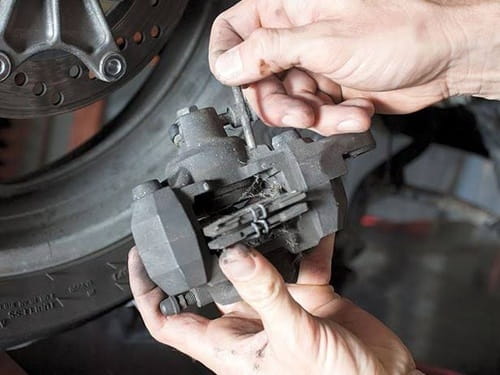
Brake pads are the friction parts that press against the brake disc when you apply the brake. This friction slows the wheel and helps stop the bike. In disc-brake motorcycles, the pads sit inside the brake caliper.
Every time you brake, a tiny amount of pad material wears away. This is normal. Brake pads are designed to wear gradually. The problem starts when they wear too much and are not replaced on time.
If the pad material becomes too thin, braking performance drops. Heat increases faster, stopping distance can become longer, and the brake disc may get damaged.
How Often Should You Replace Brake Pads?
For many commuter motorcycles, brake pads may last around 10,000–25,000 km, but this is only a broad idea. Some riders may need replacement earlier, while gentle riders may get longer life.
City riders who face heavy traffic and frequent braking may wear pads faster. Highway riders who maintain steady speed may get more life. Aggressive riders who brake hard often will wear pads much faster than calm riders.
So, instead of depending only on kilometres, check pad thickness and braking behaviour regularly.
Safe Brake Pad Thickness
Brake pads should be replaced before the friction material becomes too thin. Many mechanics suggest replacement when the pad material comes close to 2 mm. Some motorcycles have wear indicator grooves that show when the pad is near its service limit.
If the pad reaches the minimum limit mentioned in your bike manual, replace it immediately. Do not try to extract “one more month” from a worn brake pad. Brakes are not the place to take chances.
If you are not sure how to judge thickness, ask a mechanic to show you once. After that, you will be able to inspect more confidently.
Check the Wear Indicator
Many motorcycle brake pads have a small groove or line that acts as a wear indicator. When the groove becomes very shallow or disappears, it means the pad is worn and should be replaced.
Some bikes also have visual inspection space near the caliper. You can look at the pad material from the side without removing the wheel.
If your bike has drum brakes at the rear, it may have a separate wear indicator near the brake arm. Drum brake shoes are different from disc brake pads, but the same safety rule applies: do not wait until braking becomes weak.
Signs Your Brake Pads Need Replacement
The most common sign is reduced braking confidence. If you need to press the lever harder than usual, or the bike takes longer to stop, inspect the pads.
A squealing sound can also indicate worn pads or dirt. Some pads make noise when the wear indicator touches the disc. A grinding sound is more serious and may mean metal is touching metal.
Other signs include brake vibration, uneven braking, burning smell after heavy braking, brake lever feeling different, or visible thin pad material.
Do not ignore these signs, especially before highway rides or monsoon season.
Front Brake Pads Usually Wear Faster
In most motorcycles, the front brake does more work than the rear brake. When you brake, weight shifts forward, increasing load on the front tyre. This is why the front brake provides most of the stopping power.
Because of this, front brake pads often wear faster than rear pads, especially if you use the front brake correctly and regularly.
Rear pads may last longer, but they should still be checked. Rear brake neglect is common, especially in bikes with dual disc brakes.
Riding Style Makes a Big Difference
A calm rider gets more brake pad life. If you maintain distance, slow down early and avoid sudden braking, pads last longer.
An aggressive rider wears pads quickly. Late braking, hard braking, fast city riding and sudden overtaking increase brake pad wear. Riders who accelerate hard and brake hard repeatedly in traffic will need replacement sooner.
Smooth riding is safer and cheaper. It protects brake pads, tyres, chain, clutch and fuel efficiency.
City Traffic Wears Pads Faster
Indian city traffic is tough on brakes. You may brake every few seconds because of autos, scooters, pedestrians, speed breakers, buses, potholes and sudden lane changes.
This stop-go pattern wears brake pads faster than steady highway riding. If your daily ride is through crowded areas, markets or office traffic, inspect your pads more often.
Delivery riders, office commuters and students who ride daily should check brake pads at every service and visually inspect them between services.
Monsoon Braking Needs Extra Care
Rain, mud and dirty water affect braking. Wet roads reduce grip, and muddy water can carry small particles that increase pad and disc wear.
During monsoon, brake pads may also make temporary noise after riding through water. Light noise can reduce after normal braking, but continuous squealing, grinding or weak braking needs inspection.
Before monsoon, check brake pads, brake fluid, tyres and discs. Worn pads and wet roads are a dangerous combination.
Pillion and Load Affect Pad Life
Riding with a pillion or luggage increases the weight your bike has to stop. More weight means more braking effort, which increases pad wear.
If you regularly carry a pillion, delivery load, office bags, side boxes or touring luggage, your brake pads may wear faster.
This is especially important for scooters and commuter bikes used by families. A bike that regularly carries two people in city traffic needs more frequent brake inspection.
Brake Pad Quality Matters
Cheap brake pads may save money at the time of purchase, but they can wear faster, make more noise, reduce braking confidence or damage the disc.
Always use brake pads recommended by the manufacturer or a trusted quality brand. The pad should match your bike model and brake system.
Do not fit random pads because they are cheaper or “almost same size.” Wrong pads can affect braking and safety.
Organic, Semi-Metallic and Sintered Pads
Brake pads come in different materials. Organic pads are generally softer, quieter and suitable for normal commuting, but they may wear faster. Semi-metallic pads offer a balance of bite and durability. Sintered pads usually handle heat better and are common in performance bikes, but they may feel stronger and can wear discs differently depending on use.
For a commuter motorcycle, use the type recommended for your model. For sporty riding, touring or heavier bikes, pad material becomes more important.
Do not upgrade blindly without understanding how the brake feel will change.
Check Brake Disc Condition Too
Brake pads and brake discs work together. If the disc is badly scored, warped or too thin, new pads will not perform properly.
Look for deep grooves, uneven marks, blue heat spots, cracks or vibration while braking. A slightly marked disc is normal, but deep damage should be checked.
If you delay brake pad replacement and metal backing touches the disc, you may need a new disc too. That costs much more than timely pad replacement.
Brake Fluid Also Affects Braking
Sometimes riders blame brake pads when the real issue is old brake fluid or air in the brake line. If the brake lever feels spongy, soft or comes too close to the handlebar, check the hydraulic system.
Brake fluid absorbs moisture over time. Old fluid can reduce braking performance, especially during repeated braking or downhill rides.
Follow the brake fluid replacement interval mentioned in your owner’s manual. Pads, discs and fluid together decide braking safety.
Can You Replace Brake Pads at Home?
Some experienced riders can replace brake pads at home, but it should be done only if you understand the process and have correct tools. Brakes are safety-critical. Wrong installation can be dangerous.
If you are unsure, get it done at an authorised service centre or trusted mechanic. Ask them to clean the caliper area, check pins, inspect the disc and test brake feel properly.
After replacement, brake pads need bedding-in. Avoid harsh braking immediately unless necessary. Ride carefully for the first few kilometres so the pads settle properly.
Do Not Ignore Brake Noise
Brake noise does not always mean pads are finished. Dust, water, glazing, poor-quality pads or disc surface issues can also create noise.
But noise should never be ignored. A light squeak after rain may be normal. Continuous squealing, scraping or grinding needs inspection.
Grinding sound is urgent. Stop using the bike aggressively and get the brake checked as soon as possible.
When to Check Brake Pads
Check brake pads at every regular service. Also inspect them before long rides, before monsoon, after mountain trips, after heavy city use, and whenever braking feel changes.
If you ride daily, a quick visual check once a month is a good habit. It takes less than a minute but can prevent serious trouble.
High-speed riders and touring riders should inspect more frequently because braking stress is higher.
Safe Replacement Rule for Indian Riders
Replace brake pads when they reach the wear indicator, become too thin, braking performance drops, noise becomes serious, or your mechanic confirms unsafe wear.
Do not wait for complete failure. Do not delay because the bike is still “somehow stopping.” Brakes should work confidently, not barely.
If one pad in the caliper is worn more than the other, replace the set and check caliper movement. Uneven wear may indicate a sticking caliper or alignment issue.
How to Make Brake Pads Last Longer
Ride smoothly. Keep distance from vehicles. Avoid unnecessary hard braking. Maintain tyre pressure. Service brakes on time. Do not overload the bike. Use engine braking sensibly on slopes. Avoid dragging the brake pedal while riding.
Also clean the bike properly after muddy rides. Dirt around the caliper can affect brake performance and wear.
Good riding habits can extend pad life without reducing safety.
Practical Brake Pad Safety Checklist
Check pad thickness monthly. Listen for unusual noise. Notice changes in braking distance. Inspect discs for grooves. Check brake fluid level. Replace pads before they become dangerously thin. Use correct-quality parts. Get professional service if the lever feels spongy, the bike vibrates during braking, or the brake feels weak.
This checklist is simple, but it can save your bike, money and life.
FAQs
Q1. How many kilometres do motorcycle brake pads last?
Brake pads commonly last around 10,000–25,000 km, but actual life depends on traffic, riding style, bike weight, pad quality and road conditions. City riders may need replacement sooner than highway riders.
Q2. What is the safest sign that brake pads need replacement?
The safest sign is low pad thickness or reaching the wear indicator. Do not wait for grinding noise. If the pad material looks very thin or braking feels weak, replace the pads.
Q3. Is it okay to ride with squeaking brakes?
A short squeak after rain or washing may be normal, but continuous squeaking or grinding should be checked. Grinding can mean serious pad wear and possible disc damage.
Q4. Should front and rear brake pads be replaced together?
Not always. Front and rear pads wear at different speeds. Replace the worn set, but inspect both. If both are near the limit, replacing both together is safer.