 By Saurav Mehra
 Walk through any residential complex in Bengaluru or Gurugram on a Sunday morning, and you’ll spot it immediately, young couples walking golden retrievers in matching harnesses, someone booking a home grooming appointment on their phone, another neighbour comparing pet insurance plans over WhatsApp. This isn’t a passing lifestyle fad anymore. India’s pet care market has genuinely exploded from roughly USD 3.6 billion in 2024 toward a projected USD 7 billion by 2028, and some estimates push that figure as high as USD 25 billion by 2032.
What makes this genuinely different from earlier pet ownership trends is the shift in mindset. Indian pet parents, particularly millennials and Gen Z in nuclear, dual-income urban households, have stopped treating pets as mere animals and started treating them as family members deserving the same quality of food, healthcare, and grooming that humans expect. Nearly 70% of India’s pet parents in 2024 were first-time owners, which means an enormous, still-forming customer base is actively figuring out where to spend money on their pets, and entrepreneurs who position themselves correctly right now have a genuine window to become their trusted go-to before bigger players lock down the market.
Premium and Organic Pet Food Manufacturing
This remains genuinely the largest slice of the entire industry, accounting for somewhere between 70 and 80% of total pet care spending in India. What’s changed considerably is the type of food owners want, there’s a visible, accelerating shift away from home-cooked meals and mass-market kibble toward commercial, nutrient-balanced diets with clean ingredient labels and specific health benefits.
Premium formulas, grain-free options, organic ingredients, breed-specific nutrition, now sell at two to three times the price of standard feed, and pet parents are genuinely paying it without much resistance. One founder in this space reported repeat purchase rates as high as 56%, proof that once you win a pet parent’s trust with genuine ingredient transparency and results, they stay remarkably loyal. Cats specifically represent a growing, underserved niche here, now making up nearly half the pet population in many urban areas and relying even more heavily on commercial food than dogs, yet specialised feline nutrition brands remain considerably scarcer than dog-focused options.
Mobile and Salon-Based Pet Grooming Services
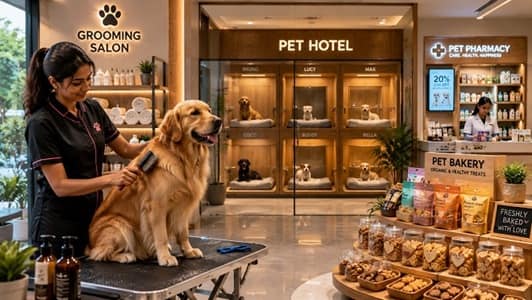
Grooming has genuinely gone from an occasional bath-and-trim errand to a recurring, premium service urban pet parents actively schedule and pay well for. Established players like Flying Fur, Paw Spa, and HUFT Grooming Studios have shown that pet salons offering premium care packages can build genuinely loyal, recurring customer bases in metro cities.
Mobile grooming units specifically offer a genuine competitive edge over fixed-location salons, since urban pet parents juggling demanding jobs genuinely value the convenience of a groomer coming to their home rather than needing to transport a nervous, resistant pet across the city. Starting with a mobile unit also keeps your initial investment considerably lower than a full physical salon, letting you build a client base and reputation before committing to a fixed location if you choose to scale.
Veterinary Telehealth and Home Visit Services
India genuinely faces a shortage of practicing veterinarians relative to its rapidly growing pet population, with only around 4,000 to 5,000 vets concentrated mostly in urban and semi-urban areas. This gap has created genuine, immediate demand for telemedicine platforms and home-visit veterinary services, exactly the model platforms like Pawxie and Vetic have built successful businesses around, particularly accelerating since the pandemic normalised remote healthcare across every category.
This business genuinely rewards combining technology with actual clinical expertise rather than choosing one over the other. A platform connecting pet parents to licensed vets for video consultations, paired with an in-person home visit option for physical examinations or vaccinations, addresses both the convenience urban pet parents want and the genuine medical rigor their pets need.
Pet Boarding and Luxury Daycare Facilities
Over 60% of urban pet owners specifically look for professional boarding when travelling, and they’re increasingly choosing facilities based on medical supervision and genuine social interaction programs rather than just a cage and basic feeding. This has pushed the category considerably upmarket, pet resorts now genuinely offer air-conditioned suites, live webcam access for anxious owners, swimming pools, and custom diet plans that mirror the premiumisation happening across the entire pet care industry.
Daycare specifically addresses a different, equally real need, working professionals who genuinely can’t leave their dog alone for a full workday but also can’t take them into the office. Positioning your facility around both boarding and daily daycare, rather than choosing one model exclusively, captures a considerably wider range of customer needs and keeps your space utilised across more days of the week.
Pet Training and Behavioural Services
Demand for structured training services has genuinely tripled over the past five years, driven substantially by first-time pet owners who have no prior experience managing a dog’s behaviour, socialisation, or obedience. This isn’t limited to basic commands anymore either, therapy training and specialised behavioural correction have become genuine, distinct service categories urban pet parents actively seek out and pay premium rates for.
This business genuinely rewards specialisation and credentialing. A trainer who can demonstrate genuine expertise in a specific area, separation anxiety, aggressive behaviour correction, or puppy socialisation programs, commands considerably higher rates than a generalist offering basic obedience classes, precisely because anxious first-time owners are looking for someone who can solve their exact, specific problem.
Pet Insurance Distribution and Advisory Services
Less than 1% of Indian pets currently carry any insurance coverage, representing genuinely enormous headroom for growth as brands like Future Generali, Digit, and Bajaj Allianz continue rolling out tailored pet insurance policies. As veterinary treatments become more sophisticated, and correspondingly more expensive, pet parents are genuinely starting to recognise insurance as a sensible financial safeguard rather than an unnecessary add-on.
This creates a genuine opportunity for insurance advisors or agents who specifically position themselves around pet coverage, since most general insurance agents don’t actively push this category yet, leaving considerably less competition than crowded categories like health or motor insurance. Partnering directly with veterinary clinics or grooming salons to refer clients toward pet insurance genuinely creates a mutually beneficial referral relationship that neither party has fully tapped into yet.
Pet Tech and Smart Accessories
The broader pet accessories market, toys, grooming kits, apparel, leashes, beds, and increasingly smart devices, is growing at a healthy 15 to 18% CAGR, and technology specifically is emerging as a genuine differentiator within this otherwise commoditised category. Products like automated feeders, activity trackers, and app-controlled monitoring devices are capturing tech-savvy urban pet parents willing to pay a premium for convenience and peace of mind while they’re away at work.
This category genuinely rewards entrepreneurs willing to either manufacture locally adapted versions of these products or become authorised distributors for established international pet tech brands entering the Indian market, since global players are actively looking for local partners to navigate India’s specific retail and e-commerce landscape rather than building distribution entirely from scratch themselves.
Choosing Which Segment Genuinely Fits Your Starting Capital
Grooming and training services genuinely offer the lowest barrier to entry, requiring skill and reputation-building considerably more than heavy upfront capital, making them sensible starting points if you’re bootstrapping rather than raising investment. Premium pet food manufacturing and boarding facilities require meaningfully more capital and infrastructure but offer considerably stronger recurring revenue once established, since pet parents buy food monthly and board their pets repeatedly rather than making a single purchase.
Veterinary telehealth and pet insurance distribution sit somewhere in between, requiring genuine domain expertise or partnerships with licensed professionals rather than large physical infrastructure, making them attractive for entrepreneurs with a healthcare or insurance background specifically looking to pivot into this rapidly growing sector.
Frequently Asked Questions
Q1. Which pet care business segment genuinely offers the fastest path to profitability for a first-time entrepreneur?
Mobile grooming and training services typically generate revenue fastest, since they require considerably less upfront capital than food manufacturing or boarding facilities, and pet parents are already actively searching for and willing to pay for these specific services in most urban markets.
Q2. Is the premium pet food segment genuinely still open to new entrants, given how many big FMCG companies are entering it?
Yes, particularly in specialised niches like feline-specific nutrition, breed-specific formulas, or clean-label functional products addressing specific health needs, since larger FMCG players tend to focus on broad, mass-market positioning, leaving genuine room for smaller brands to win loyal customers through specialisation and ingredient transparency.
Q3. Do I need veterinary qualifications myself to start a pet healthcare or telehealth business
Not necessarily to build the platform or business itself, but you’ll genuinely need to partner with licensed veterinarians to provide the actual medical consultations and treatment, since diagnosing and treating animals legally requires proper veterinary credentials regardless of how the service gets delivered to customers.
Q4. Which Indian cities currently offer the strongest, least saturated opportunity for a new pet care business?
While Mumbai, Delhi, Bengaluru, Hyderabad, and Pune already have relatively high pet ownership and established competition, tier-2 cities are genuinely seeing rising pet ownership with considerably fewer organised, professional pet care options currently available, making them worth serious consideration if you’re looking for less competitive ground to establish your business.