 By Subhash Kumar
 In almost every Indian kitchen, onions and potatoes are the emergency heroes. No sabzi? Make aloo fry. Guests arrived suddenly? Make poha, upma, paratha or aloo ki sabzi. Need a quick base for curry? Onion is ready. These two vegetables are affordable, versatile and used almost daily, which is why most families buy them in bulk. But then comes the common problem: within a few days, potatoes start sprouting, onions become soft, and sometimes the whole basket smells bad.
This is not just a small kitchen inconvenience. When onions and potatoes spoil quickly, money is wasted, cooking plans get disturbed, and unsafe food may enter the plate. In Indian weather—especially during summer, monsoon and humid conditions—sprouting can happen faster if storage is wrong. Many people keep onions and potatoes together in one basket under the sink or near the gas stove, but this is one of the biggest reasons they spoil early.
The good news is simple: you do not need expensive storage boxes or a special pantry. With the right place, airflow, darkness and separation, onions and potatoes can last much longer. Let’s understand the best way to store them in a practical Indian kitchen.
Why Onions and Potatoes Sprout So Quickly
Onions and potatoes are living produce. Even after harvest, they continue to react to temperature, light, moisture and air. When they get the right conditions, they start growing again. That growth appears as green shoots in onions and sprouts in potatoes.
Warm temperature, sunlight, moisture and poor ventilation speed up this process. If potatoes are kept in a hot kitchen corner, they may sprout quickly. If onions are kept in a damp plastic bag, they may become soft or mouldy. If both are stored together in a closed basket, spoilage can happen even faster.
This is why proper storage is not only about keeping them somewhere convenient. It is about controlling the small conditions that trigger sprouting.
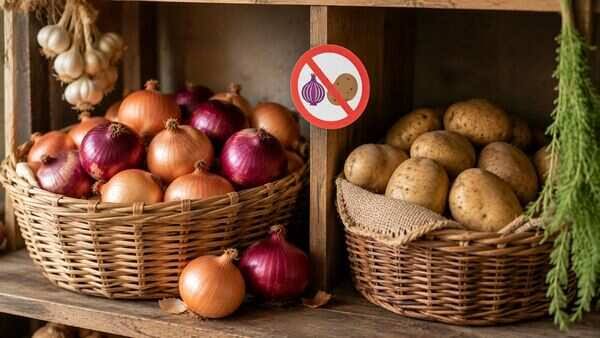
Never Store Onions and Potatoes Together
This is the first and most important rule. Onions and potatoes should be stored separately.
Both may look like “dry vegetables,” but they do not behave well together in storage. Onions can release moisture and gases that may make potatoes sprout and soften faster. Potatoes also need a dry, dark, well-ventilated place, but they should not be packed closely with onions.
Many Indian homes keep both in the same tokri or plastic basket. It saves space, but it reduces shelf life. Keep them in different baskets, different shelves or at least separate corners with airflow.
If your kitchen is small, use two hanging mesh bags or two separate ventilated containers instead of one mixed basket.
Best Place to Store Potatoes
Potatoes should be stored in a cool, dark, dry and ventilated place. A lower kitchen cabinet, pantry corner, storeroom shelf or mud room area can work well if it is not hot or damp.
Do not keep potatoes near the gas stove, oven, microwave, refrigerator back side or sunny window. Heat encourages sprouting and softening. Light can make potatoes turn green, and green potatoes may contain higher levels of natural toxins.
Also avoid keeping potatoes directly on the floor if the floor gets damp. Use a basket, crate, cardboard box, jute bag or paper bag with ventilation.
Best Place to Store Onions
Onions also need a dry, dark and airy place. They should not be kept in closed plastic bags because trapped moisture can make them soft, rotten or mouldy.
A mesh basket, bamboo basket, open crate, jute bag or hanging net bag works well. The idea is simple: onions should breathe.
Keep onions away from direct sunlight, sink moisture and hot cooking areas. If onions are stored in a damp place, they may start rotting from inside. If they are stored in too much heat, they may dry out or sprout faster.
Avoid Plastic Bags for Long Storage
Many people bring onions and potatoes home in plastic bags and leave them as they are. This is a common mistake.
Plastic bags trap moisture and reduce airflow. This creates a warm, humid environment that encourages sprouting, mould and rotting. As soon as you bring them home, remove them from plastic bags.
Transfer potatoes to a paper bag, jute bag, basket or cardboard box. Transfer onions to a mesh bag or open basket. If you use a container, make sure it has holes or enough airflow.
Should You Refrigerate Onions and Potatoes?
Whole raw potatoes should not be stored in the refrigerator for normal home use. Cold temperature can change potato starch into sugar, affecting taste, texture and cooking quality. Potatoes may become darker during frying and taste slightly sweet.
Whole dry onions also do not need refrigeration. Refrigeration can add moisture, making onions soft or mouldy faster.
However, cut onions must be refrigerated in a covered container and used quickly. Cooked potatoes or cut potatoes should also be refrigerated if not used immediately. The rule is different for whole produce and cut produce.
Whole onions and potatoes: store outside in a cool, dry, dark place.
Cut onions and cooked potatoes: refrigerate safely.
Keep Them Away From Sunlight
Sunlight is bad for potatoes because it can make them turn green. Green colour on potatoes is a warning sign. It may come with bitter taste and higher levels of natural compounds that are not safe in large amounts.
If a potato has small sprouts but is still firm and not green, some people remove the sprouts deeply and cook it properly. But if it is green, heavily sprouted, wrinkled, soft or bitter-smelling, it is better to discard it.
Onions also sprout faster when exposed to light and warmth. Keep them in a dark, airy place to slow down growth.
Check and Sort After Buying
Do not directly store the full bag without checking. One bad onion or potato can spoil others.
After buying, spread them out and remove damaged pieces. Use bruised, slightly cut or soft items first. Do not store wet, muddy or damaged pieces with good ones.
For potatoes, remove any that are green, rotten, leaking or badly sprouted. For onions, remove those that are soft, mouldy, blackened, wet or foul-smelling.
This small sorting habit can save the rest of the stock.
Do Not Wash Before Storage
Never wash onions or potatoes before storing them. Moisture increases spoilage. Even if they look dusty, keep them dry and wash only before cooking.
If potatoes are muddy, let the mud dry and gently brush it off with a dry cloth or brush. Washing and then storing can make them rot faster, especially in monsoon.
Onions should also be kept dry. If the outer skin is loose or dirty, remove only the dry outer layer before use, not before bulk storage.
Use the Old Stock First
Indian kitchens often make the mistake of adding fresh potatoes and onions over old stock. The older pieces remain at the bottom and slowly spoil.
Follow the “first in, first out” rule. Use older onions and potatoes first. When you buy fresh stock, place it behind or below only after checking the old stock.
Once a week, inspect the basket. Remove sprouted, soft or spoiled pieces immediately. This prevents one bad vegetable from affecting the rest.
Storage During Summer
Summer heat can make sprouting very fast. In hot Indian kitchens, potatoes may start sprouting within a week if kept near heat.
During summer, buy smaller quantities instead of storing a full month’s stock. Keep them in the coolest part of the house, not necessarily the kitchen. A dry storeroom, shaded balcony corner or ventilated cabinet may work better.
Do not keep potatoes in closed containers during summer. They need airflow to avoid sweating and rotting.
Storage During Monsoon
Monsoon brings moisture, and moisture is the biggest enemy of onions. Onions can become soft, black or rotten if stored in damp places.
During rainy season, keep onions in a raised basket with good ventilation. Avoid storing them under the sink or near wet walls. Check more frequently for soft or mouldy onions.
Potatoes should also be protected from dampness. If the storage area smells musty or feels wet, shift them to a drier place.
Can You Use Sprouted Onions?
Yes, lightly sprouted onions are usually usable if they are firm, smell normal and have no mould or sliminess. The green shoot may taste slightly bitter, so you can remove it before cooking.
Sprouted onions work better in cooked dishes than raw salads because their texture and flavour may change. If the onion is soft, leaking, blackened or smells bad, throw it away.
You can also use the green onion shoot like spring onion in some dishes if it looks fresh and clean.
Can You Use Sprouted Potatoes?
Potatoes need more caution than onions. If a potato has tiny sprouts but is still firm, not green and not wrinkled, you can remove the sprouts deeply and cook it well. But if the potato is green, bitter, soft, shrivelled or heavily sprouted, discard it.
Do not feed green or badly sprouted potatoes to children, elderly people or pets. Cooking does not fully remove the risk from green or badly spoiled potatoes.
When in doubt, do not take chances.
Best Containers for Indian Homes
For onions, use mesh bags, cane baskets, wire baskets, bamboo baskets or open crates. For potatoes, use paper bags, cardboard boxes, jute bags, baskets or ventilated bins.
Avoid airtight plastic boxes. Avoid storing them in sealed buckets. Avoid keeping them in wet cloth bags.
If space is limited, use a two-tier vegetable rack, but keep onions on one level and potatoes on another with some distance between them.
Practical Weekly Routine
Once a week, check both onions and potatoes. Remove soft onions, sprouted potatoes and damaged pieces. Wipe the storage basket if it has dirt or moisture. Keep the area dry and airy.
Buy according to your family’s actual use. A small family does not need a huge sack of potatoes unless there is a proper cool storage space.
The best storage method is simple: separate them, keep them dry, keep them dark, give them airflow and inspect regularly.
FAQs
Q1. Why do potatoes sprout faster when kept with onions?
Potatoes sprout faster near onions because the storage environment becomes less suitable due to moisture and natural gases released by produce. Keeping them together in a closed basket can speed up sprouting and spoilage.
Q2. Can I store onions and garlic together?
Yes, onions and garlic can usually be stored together because both prefer dry, dark and well-ventilated storage. But keep potatoes separate from both.
Q3. Should I throw away all sprouted potatoes?
Not always. If the potato is firm, not green and has only small sprouts, remove the sprouts deeply and cook it properly. If it is green, soft, wrinkled or heavily sprouted, discard it.
Q4. How can I stop onions from becoming soft in monsoon?
Store onions in a dry, airy basket away from damp walls and the sink. Do not keep them in plastic bags. Check them often and remove any soft or mouldy onions quickly.