 By Saurav Mehra
 For most Indian riders, a commuter bike is not just a vehicle—it is a daily partner. It goes to office, shop, school, coaching, market, railway station, petrol pump, village road, city traffic and sometimes even long weekend rides. A 100cc, 110cc, 125cc or 150cc commuter bike may not look expensive like a superbike, but it works harder than many premium machines because it runs almost every day in heat, dust, traffic and rough roads.
That is why engine oil matters so much. Many riders simply say, “Mechanic jo daalega, wahi theek hai,” or choose the cheapest oil available at the shop. Some use car engine oil by mistake. Some delay oil change to save ₹300–₹500, but later spend much more on engine noise, clutch problems, poor pickup or reduced mileage. Engine oil is not only for lubrication; it protects the engine, cools internal parts, cleans deposits, supports gearbox movement and helps the clutch work properly.
Choosing the best engine oil for a commuter bike is not about buying the most expensive bottle. It is about choosing the correct grade, correct certification and correct type according to your bike’s manual, riding conditions and service interval. Once you understand a few simple points, you can avoid wrong oil and keep your bike smooth for years.
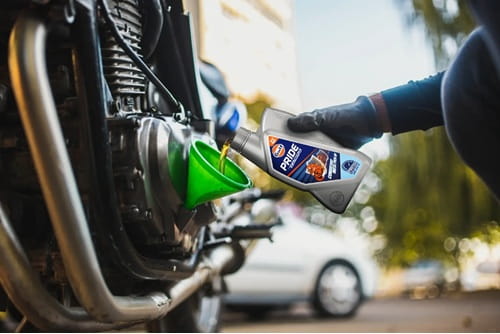
Why Engine Oil Is Important in Commuter Bikes
A motorcycle engine has many metal parts moving at high speed. Without proper oil, these parts rub against each other, create heat and wear out quickly. Engine oil forms a protective layer between moving parts.
In most commuter motorcycles, the same oil also helps the gearbox and wet clutch. This is why bike engine oil is different from car engine oil. A wrong oil may protect the engine but cause clutch slipping or rough gear shifts.
Good oil reduces friction, keeps the engine cleaner, improves smoothness, controls heat and supports better fuel efficiency. Bad or old oil makes the bike noisy, rough and weak.
Always Start With the Owner’s Manual
The best engine oil for your bike is the one recommended by the manufacturer. Your owner’s manual mentions the correct oil grade, oil capacity, change interval and required standards.
For many Indian commuter bikes, common grades include 10W-30, 10W-40 or 20W-40, depending on brand and model. Do not guess the grade only because another rider uses it.
A Hero Splendor, Honda Shine, TVS Radeon, Bajaj Platina, Yamaha Saluto or old commuter bike may have different requirements. Even two bikes from the same company can need different oil grades.
If you do not have the manual, check the manufacturer’s official website or ask an authorised service centre.
Understand Engine Oil Grade Simply
Engine oil grade looks like 10W-30, 10W-40 or 20W-50. These numbers show how the oil flows at cold start and high temperature.
The first number with “W” shows cold-flow behaviour. Lower number means the oil flows more easily during cold starts. The second number shows oil thickness at engine operating temperature. Higher number means the oil remains thicker when hot.
For example, 10W-30 is commonly used in many commuter bikes because it flows well and supports fuel efficiency. 10W-40 may suit some bikes that need slightly thicker oil at high temperature. 20W-50 is often used in some older or higher-capacity bikes, but it should not be used randomly.
The correct grade depends on engine design, not personal opinion.
JASO MA and MA2: Very Important for Bikes
Most commuter motorcycles use a wet clutch, where the clutch runs in the same oil as the engine. This is why you should look for JASO MA or JASO MA2 on the oil bottle.
JASO MA and MA2 oils are made for motorcycles with wet clutches. They help prevent clutch slipping and support proper gear shifting.
Avoid using oil meant only for cars unless the manufacturer clearly allows it. Many car oils have friction modifiers that may not suit motorcycle wet clutches.
For geared commuter bikes, JASO MA or MA2 is a very important mark. For many scooters, JASO MB may be used because their transmission setup is different. Do not confuse scooter oil and motorcycle oil.
API Rating: Another Quality Mark
API rating shows oil performance level. You may see API SL, SM, SN or similar markings on the bottle. A newer or higher API category generally indicates improved oil performance, but you must still follow your bike manufacturer’s recommendation.
For commuter bikes, do not buy oil only because the bottle looks attractive. Check both API rating and JASO rating. A good motorcycle oil should match the required viscosity grade and standard.
If the manual says API SL and JASO MA2, choose oil that meets or exceeds that requirement.
Mineral, Semi-Synthetic and Fully Synthetic Oil
Engine oils are commonly available as mineral, semi-synthetic and fully synthetic.
Mineral oil is usually cheaper and suitable for many basic commuter bikes if changed on time. It works well for normal city use and regular servicing.
Semi-synthetic oil offers better performance than mineral oil and can be a good middle option. It may provide better smoothness, heat resistance and protection.
Fully synthetic oil is more advanced and offers strong protection, better stability and smoother performance. But it is costlier and not always necessary for a basic commuter bike unless the manufacturer recommends it or your usage is demanding.
For most commuter riders, correct grade and timely change matter more than blindly choosing fully synthetic oil.
Which Oil Is Best for Daily City Riding?
For daily city commuting, choose the grade recommended in the manual. If your bike recommends 10W-30 JASO MA2, use that. If it recommends 10W-40, use that.
City riding includes frequent stops, low speeds, heat and gear changes. Oil must protect the engine and clutch during repeated acceleration and braking.
A good semi-synthetic oil can be useful if you ride long distances daily or face heavy traffic. But if your bike runs normally and you follow service intervals, good-quality mineral oil from a trusted brand can also work well.
Best Oil for Indian Summer
Indian summer can be harsh, but that does not mean every bike needs thicker oil. Many riders think switching from 10W-30 to 20W-50 in summer is always better. This is not correct.
Modern commuter engines are designed with specific oil clearances. Too thick oil can reduce smoothness, affect mileage and make cold starts harder. Use thicker oil only if recommended by the manufacturer or advised by a trusted mechanic for a specific old-engine condition.
For a healthy modern commuter bike, stay with the recommended grade even in summer unless the manual provides alternate grades for different temperatures.
Best Oil for Old Commuter Bikes
Older bikes may develop more engine noise, oil consumption or roughness due to wear. Some mechanics suggest slightly thicker oil for old engines, but this should be done carefully.
If your old bike originally requires 10W-30, do not immediately jump to a very thick oil. First check engine condition, oil leakage, tappet setting, clutch condition and service history.
For old bikes, timely oil change is very important. Old engines may contaminate oil faster due to wear, dust and heat. Use a trusted brand and avoid fake oil.
How Often Should You Change Engine Oil?
Follow the oil-change interval mentioned in your bike manual. Many commuter bikes require oil change after a fixed number of kilometres or months, whichever comes first.
If your bike runs in heavy traffic, dusty areas, short trips, high heat or with regular pillion load, oil may degrade faster. In such conditions, changing slightly earlier can be good for engine life.
Do not judge oil only by colour. Engine oil becomes dark as it cleans the engine. But if oil level drops, smells burnt, feels too thin, or the engine becomes noisy, get it checked.
Check Oil Level Regularly
Even the best oil cannot protect the engine if the oil level is low. Check engine oil level as per your bike manual. Some bikes use a dipstick, while others use an inspection window.
Park the bike on level ground. Let the engine cool for a few minutes after riding. Check oil level correctly according to the manual.
Low oil can cause serious engine damage. Overfilling is also bad because it can create pressure, leakage, smoke or rough running. Always fill the correct quantity.
Do Not Mix Random Oils
Avoid mixing different grades and brands unless it is an emergency. If your bike has 10W-30 and you add 20W-50 randomly, oil behaviour changes.
In an emergency, topping up with a compatible oil is better than running low oil. But at the next service, drain and refill with the correct recommended oil.
For normal maintenance, use one correct oil consistently.
Beware of Fake Engine Oil
Fake engine oil is a real problem in India. It may come in copied bottles, reused containers or suspiciously cheap packaging. Fake oil can damage the engine, reduce clutch performance and create deposits.
Buy oil from authorised service centres, trusted spare-parts shops or reliable online sellers. Check seal, batch number, MRP label, QR code if available and packaging quality.
Do not buy very cheap oil from unknown sources just to save a small amount. Engine repair is much costlier than genuine oil.
Signs Your Bike Needs Oil Change
Your bike may need oil change if the engine becomes noisier than usual, gear shifts feel hard, clutch feels rough, pickup drops, engine heats more, oil level is low or oil smells burnt.
A commuter bike should feel smooth and predictable. If it suddenly feels rough after many kilometres of use, old oil may be one reason.
However, do not blame oil for every problem. Poor chain lubrication, dirty air filter, bad spark plug, low tyre pressure and clutch wear can also affect performance.
Can Better Oil Improve Mileage?
Good oil can help the engine run smoother and reduce friction, which may support better mileage. But it will not magically turn a 60 km/l bike into an 80 km/l bike.
Mileage depends on riding style, tyre pressure, traffic, engine condition, air filter, spark plug, chain condition, fuel quality and load.
Correct engine oil helps maintain expected mileage. Wrong or old oil can reduce mileage.
Should You Use Racing Oil in Commuter Bikes?
Racing oil is not necessary for normal commuter bikes. Such oils may be designed for high-performance engines and different operating conditions.
A commuter bike needs reliable protection, clutch compatibility, good fuel efficiency and regular service life. Choose practical oil, not fancy marketing.
If your bike is a simple 100cc or 125cc daily-use machine, manufacturer-recommended oil is usually the smartest choice.
Engine Oil for Bikes With Wet Clutch
Most commuter bikes have wet clutches. This means the clutch plates work inside oil. If the oil is too slippery or not JASO MA/MA2 certified, clutch slipping can happen.
Symptoms of clutch slipping include engine rpm rising but bike not accelerating properly, poor pickup and burning smell in severe cases.
Using the correct motorcycle oil helps avoid this problem. Never use car oil casually in a wet-clutch motorcycle.
Practical Buying Checklist
Before buying engine oil, check your bike manual. Confirm the viscosity grade, API rating, JASO rating and oil quantity. Choose a trusted brand. Buy from a genuine source. Check manufacturing date and seal. Avoid unnecessary upgrades unless your riding condition needs it. Change oil on time and replace the oil filter if your bike has one.
This checklist is enough for most commuter-bike owners.
FAQs
Q1. Which engine oil is best for commuter bikes?
The best engine oil is the grade recommended in your bike’s owner’s manual. For many Indian commuter bikes, 10W-30 or 10W-40 with JASO MA/MA2 certification is commonly used, but always confirm for your exact model.
Q2. Can I use car engine oil in my motorcycle?
It is not recommended for most geared commuter bikes because they usually have wet clutches. Use motorcycle engine oil with JASO MA or MA2 certification to avoid clutch slipping and gear-shift issues.
Q3. Is fully synthetic oil necessary for a commuter bike?
Not always. Many commuter bikes run well on good-quality mineral or semi-synthetic oil if changed on time. Fully synthetic oil can offer better protection, but it is useful only if it matches the bike’s required grade and standard.
Q4. What happens if I delay engine oil change?
Delayed oil change can increase engine wear, heat, noise, rough gear shifts, clutch issues and mileage drop. In the long term, it may reduce engine life and increase repair cost.