 By Saurav Mehra
 Somewhere in Jaipur, a college student is running a home décor store that ships pan-India within 48 hours, never touches a single product, and never worried about a warehouse deposit or bulk inventory sitting unsold. That’s genuinely the appeal of dropshipping done right, especially when you build it around Indian suppliers rather than relying on AliExpress shipments that take three weeks and arrive in generic packaging that does nothing for your brand.
Here’s what makes the Indian-supplier route genuinely worth considering over the international model most beginners default to. Domestic suppliers ship in 2 to 7 days instead of 15 to 30, quality control is considerably easier to manage, and you can actually pick up the phone and talk to someone if something goes wrong. For Indian entrepreneurs building a store for Indian customers specifically, this speed and reliability advantage often outweighs the slightly lower margins compared to ultra-cheap Chinese sourcing.
Understanding Why Indian Suppliers Change the Game
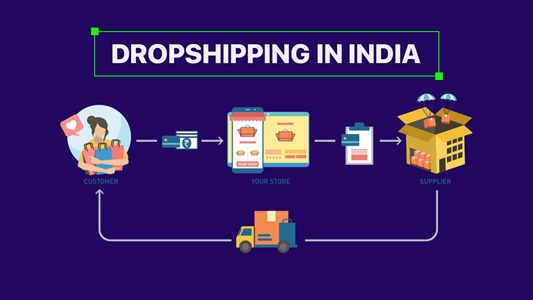
Most people picture dropshipping through the AliExpress lens, browsing endless generic products, placing bulk test orders, and anxiously waiting weeks for delivery while hoping quality holds up. Indian dropshipping, when built around domestic suppliers, works fundamentally differently. Your customer places an order, your supplier ships directly under your brand name, often within 2 to 5 days, and you never touch the physical parcel at any point.
This domestic-first approach genuinely suits Indian consumers better too. Faster delivery reduces the return-to-origin rate that plagues slow-shipping stores, and customers trust a store that delivers quickly considerably more than one where tracking shows a package still sitting in customs three weeks later.
Choosing Between Reselling and Print-on-Demand Models
Before picking suppliers, decide which flavour of dropshipping actually fits your situation. Traditional reselling means sourcing generic, ready-made products from a supplier catalogue, apparel, electronics accessories, home goods, and selling them under your branding without any customisation. Margins here typically run somewhere between 30% and 50%, depending on your niche and competition.
Print-on-demand works differently and genuinely suits anyone wanting stronger brand identity from day one. Products only get manufactured once an order comes in, meaning zero dead stock and zero upfront inventory risk, and everything ships carrying your brand name rather than a generic label. Margins here tend to run higher too, often 30% to 50% versus the 8% to 15% typical of plain resold generic products, precisely because customisation genuinely justifies a higher price point.
Finding Reliable Indian Suppliers
This is genuinely where your entire business succeeds or falls apart, so it deserves careful attention rather than picking the first supplier that shows up in a Google search. IndiaMART and TradeIndia remain the two biggest platforms for connecting with Indian manufacturers and wholesalers directly, letting you browse catalogues across nearly every product category and negotiate terms with suppliers before committing.
For print-on-demand specifically, platforms like Qikink and Printrove have built their entire model around Indian dropshippers, handling printing, packaging with your branding, and delivery within a few days across the country, connecting directly with Shopify, WooCommerce, and similar platforms through simple integrations. Meesho works differently again, functioning more as a reselling marketplace itself, genuinely beginner-friendly since it requires minimal upfront investment and even lets you start without GST registration in certain categories.
Before committing to any supplier, place a test order yourself. Check the actual product quality, how accurately it matches the catalogue description, how fast it genuinely ships, and how the packaging looks when it arrives. Skipping this step and trusting a supplier purely based on their website is exactly how new dropshippers end up with a flood of unhappy customer complaints in their first month.
Setting Up Your Legal and Tax Foundation
Even a home-based dropshipping business needs proper legal footing, and getting this sorted early saves you from complications down the line. Register your business under a structure that fits your scale, a sole proprietorship works fine for most beginners, while a private limited company makes sense if you’re planning to raise investment or hire employees eventually.
GST registration becomes mandatory once your annual turnover crosses ₹40 lakh, or ₹20 lakh in certain states, though many suppliers and platforms actually require GST registration earlier regardless of your turnover, so it’s worth checking your specific supplier’s requirements before assuming you can skip it. Registration itself is free through the official GST portal, taking roughly 7 to 10 working days, though hiring a chartered accountant to handle the process and ongoing filing typically costs a few hundred to a couple of thousand rupees. If you’re planning to source or sell internationally down the line, an Import Export Code becomes relevant too, though for a purely domestic Indian-supplier operation, this isn’t an immediate requirement.
Building Your Actual Online Store
Once your supplier relationship and legal basics are sorted, choosing your storefront platform is next. Shopify remains the most widely used option among serious Indian dropshippers, offering the smoothest integrations with supplier platforms and the widest ecosystem of apps for automating order sync, inventory updates, and fulfilment. WooCommerce works well if you’re already comfortable with WordPress and want full ownership without Shopify’s subscription fees, while some sellers building smaller operations start directly on marketplaces like Meesho or Flipkart before investing in their own dedicated website.
Whichever platform you choose, focus initially on a lean product catalogue rather than listing everything your supplier offers. Fifteen to twenty well-chosen products, each with four or five high-clarity images and a genuinely compelling, specific product description, work considerably better than a bloated, unfocused store trying to be everything to everyone.
Pricing Your Products Correctly From Day One
This is genuinely where new dropshippers most often undercut their own profitability without realising it. Your selling price needs to cover your supplier’s base cost, shipping charges, applicable GST, payment gateway fees, and your actual profit margin, all while still staying competitive against similar stores in your niche.
A useful benchmark many successful Indian dropshippers use is aiming for at least three times your landed cost, product cost plus shipping, as your final selling price. Anything thinner than this margin becomes genuinely unsustainable once you factor in advertising spend and inevitable returns, since even a modest return rate can quietly erode a slim margin down to nothing.
Picking a Niche That Actually Converts
Broad categories like “fashion accessories” or “home décor” are hopelessly saturated in 2026, and generic stores selling whatever’s trending on AliExpress genuinely struggle against established competition. The dropshippers actually succeeding are going considerably more specific, “ergonomic accessories for work-from-home professionals” rather than just “office products,” or “space-saving furniture for small city apartments” rather than generic home décor.
Run every potential product through a quick mental checklist before committing. Does it solve a genuine, specific problem rather than being merely nice-to-have? Can you demonstrate it effectively in a short video? Does it comfortably support at least a three-times markup over your landed cost? Can it ship safely without high breakage or return rates? And critically, are there already ten or more established stores dominating this exact product, if so, you’re likely too late to that specific niche and need to find your own angle.
Handling Returns, Payments, and Customer Trust
Since you’re working with Indian suppliers, returns genuinely become far more manageable than international dropshipping, where a return often costs more in shipping than the product itself is worth. Set up a clear, honest return and refund policy upfront, and integrate payment gateways supporting UPI, cards, wallets, and cash-on-delivery, since COD remains genuinely significant for Indian e-commerce, particularly for first-time customers who don’t yet trust your store enough to pay upfront.
Displaying genuine customer reviews prominently, alongside clear contact information and transparent shipping timelines, builds the trust that turns first-time buyers into repeat customers, something considerably harder to achieve when customers are waiting anxiously for a slow international shipment with no real accountability if something goes wrong.
Frequently Asked Questions
Q1. Do I need to register for GST before I even place my first order with a supplier?
Not necessarily immediately, some platforms like Meesho let beginners start in limited categories without GST. However, most established suppliers and platforms increasingly require GST registration regardless of your current turnover, so it’s worth checking your specific supplier’s onboarding requirements before assuming you can operate entirely without it.
Q2. How much money do I genuinely need to start a dropshipping store using Indian suppliers?
A basic setup using free tools and organic marketing can realistically start with as little as ₹500 to ₹3,000 for testing and learning, while a more serious store with paid tools, a proper platform subscription, and some initial advertising budget typically needs ₹10,000 to ₹30,000 to get meaningful traction.
Q3. What’s the biggest difference between using Indian suppliers versus international ones like AliExpress?
Indian suppliers deliver considerably faster, typically 2 to 7 days versus 15 to 30 days internationally, and offer easier communication and simpler returns, though product costs are sometimes slightly higher and catalogues can be narrower compared to the vast, low-cost range available through international sourcing.
Q4. How do I know if a supplier is genuinely reliable before committing my store to them?
Always place a test order yourself first, checking the actual product quality against the catalogue description, genuine delivery speed, and how the packaging presents your brand. Skipping this verification step and trusting a supplier purely based on their website listings is one of the most common reasons new dropshippers end up with unhappy customers within their first few weeks.